









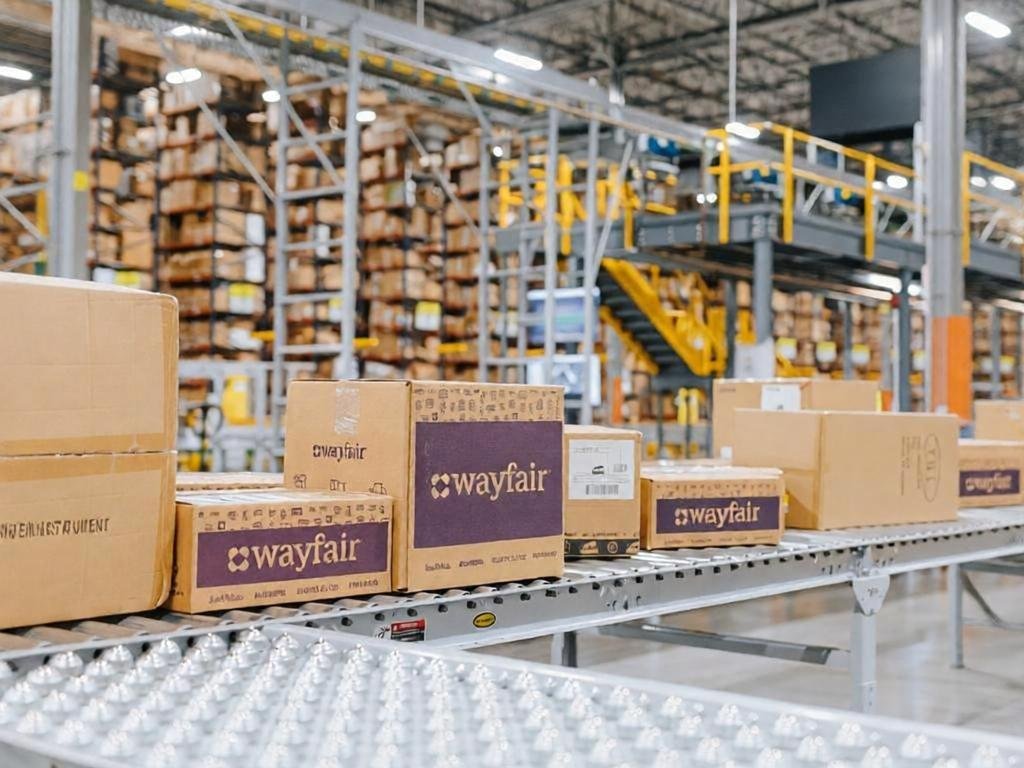
Wayfair built the playbook for selling furniture online, but in 2026 it is no longer the only game in town. The company that once dominated US furniture e-commerce is fighting to hold its position while competitors chip away at the edges of its empire. Amazon is swallowing the standard SKU layer with logistics dominance. IKEA has cracked the omnichannel code and is gaining US share. Temu and Shein are flooding the entry-level segment with prices that make no logistical sense. Meanwhile, DTC brands and legacy retailers with serious logistics muscle are carving out defensible niches. For Chinese suppliers, this is not a single-platform crisis. It is a structural rewiring of how US consumers discover, compare, and purchase furniture. Understanding who is actually winning—and who is merely burning cash for downloads—has become a survival skill.
Why This Matters to Chinese Suppliers
We spend a lot of time on factory floors in Dongguan, Foshan, and Hangzhou. The anxiety is palpable. Export managers who built business models around Wayfair’s supplier program are watching PO volumes soften. Cross-border sellers betting on Amazon are getting squeezed by rising ad costs and compliance audits. Everyone is getting bombarded by Temu recruiters promising zero commission glory. The problem is not a lack of information. It is a lack of trustworthy synthesis. Fragmented headlines scream Wayfair Layoffs or Temu Downloads Surge without explaining what those headlines mean for a container load of dining chairs leaving Ningbo. This article is that synthesis.
The Reality of Wayfair’s Position
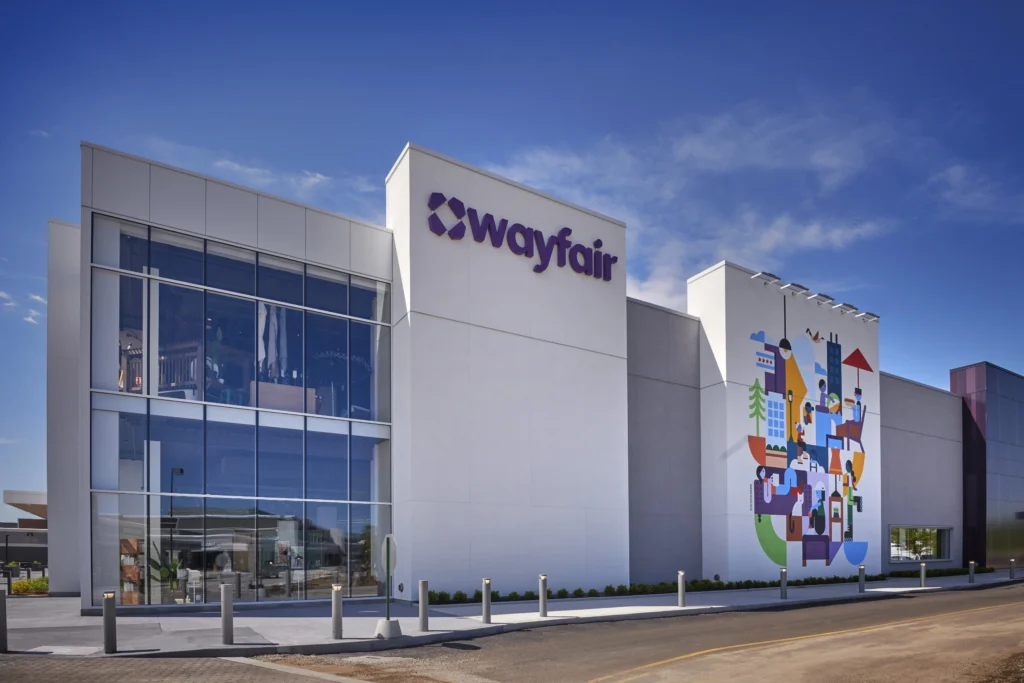
Let us be blunt. Wayfair is not collapsing. It is still a multi-billion-dollar revenue machine. Full year 2025 net revenue was $12.46 billion, up from $11.85 billion in 2024. In Q1 2026, US net revenue grew 7.5% year over year to $2.61 billion. Active customers hit 21.4 million as of March 31, 2026, up 1.4% year over year. Average order value climbed to $312. CEO Niraj Shah stated the company outperformed the market by a high single-digit spread in Q1 2026 and that share gains are accelerating.
But comfortable winning this is not. The real story is persistent margin pressure. Wayfair posted a net loss of $313 million in 2025, improved from $492 million in 2024 but still deep in the red. CastleGate, its proprietary logistics network, has become a capital-intensive balancing act. The marginal cost of warehousing bulky goods in a high-interest-rate environment does not scale elegantly. Wayfair’s brand is drifting from the furniture store to the furniture search engine—a comparison shopping layer where consumers check prices before buying elsewhere. That is a precarious place to live.
Wayfair’s Structural Pressures
Three forces are eating into Wayfair’s comfort margin.
CastleGate’s marginal benefit decay is the first. Building dedicated warehousing for furniture sounded brilliant in 2019. In 2026, with occupancy costs up and throughput optimization hitting diminishing returns, the math looks rough. We have spoken with suppliers who watched their CastleGate fees creep upward while inventory turns slowed. For reference only, subject to official verification.
The second force is CAC payback period elongation. Wayfair buys traffic. When Meta and Google ad auctions get more expensive and conversion rates dip, unit economics wobble. Furniture is not a monthly subscription. The purchase cycle is long, and the LTV math remains challenging.
The third force is competitive encroachment on the standard SKU layer. Wayfair thrived on the long tail—niche SKUs, eclectic styles, endless selection. But the long tail is expensive to merchandise and ship. Consumers are still browsing the endless aisle, but they are increasingly buying the boring stuff elsewhere. Standard sofas, basic bed frames, and generic dining sets are migrating to platforms with lower friction and faster delivery.
The Real Competitive Landscape
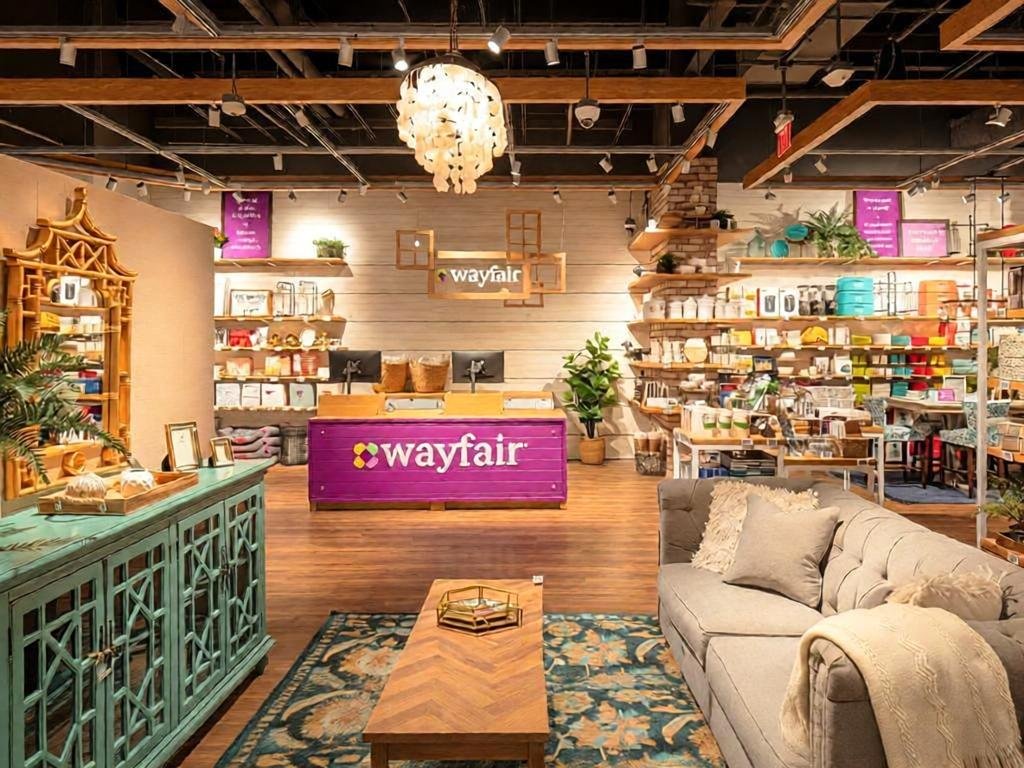
The US furniture e-commerce arena in 2026 is not a duopoly. It is a multi-front war with wildly different rules.
Amazon has turned its logistics infrastructure into a furniture weapon. According to PYMNTS data, Amazon grew its share of the home furnishings market to 18.9% in 2024, up from 17.5% in 2023. Prime delivery promises on standard SKUs, coupled with relentless search dominance, make it the default for replacement purchases. The Vine program has flooded furniture listings with reviews, lowering the trust barrier. For Chinese sellers, Amazon is a double-edged sword: massive reach, but suffocating compliance and an IP enforcement system that can shut down a listing overnight.
IKEA has stopped treating e-commerce as a side project. Its click-and-collect ecosystem, combined with urban store formats and brutal cost discipline, gives it a unique edge. IKEA US has increased market share by 13.6% over the last five years. The company is investing over $2.2 billion in omnichannel growth and opening new Plan & Order Points across the US. IKEA wins on price for entry-level and mid-market goods, but more importantly, it wins on trust. American consumers know exactly what they are getting. That predictability is priceless in a category plagued by Instagram vs Reality disappointment.
Temu and Shein are the wildcards. Their furniture GMV numbers are growing fast, but the opacity is staggering. We are talking about cross-border shipments of sub-fifty-dollar side tables and eighty-dollar futons that somehow land in US doorsteps with free shipping. The unit economics only work with massive subsidy burn and de minimis tariff exploitation. For reference only, subject to official verification. The win here is traffic and app downloads, not sustainable profit. Any supplier treating Temu as a long-term channel is playing with fire.
DTC brands are doing the opposite. They are abandoning the race to the bottom and investing in brand storytelling and design differentiation. In mattress and upholstered goods, DTC channels have captured over one-third of online sales among top retailers. Their volumes are smaller than the giants, but margins are healthier. These brands will fly to Guangzhou to inspect foam density and fabric dye lots. They care about narrative, not just price.
Then there is the old guard. Home Depot, Lowe’s, and Walmart have stopped ceding furniture to the specialists. BOPIS and local delivery networks let them offer something Wayfair cannot: same-day or next-day fulfillment on bulky goods without the CastleGate overhead. Walmart ranks second in US furniture e-commerce by GMV according to ECDB data. Walmart’s marketplace expansion has also opened a new front for third-party furniture sellers.
Wayfair vs. Key Competitors: 2026 Strategic Positioning
| Dimension | Wayfair | Amazon | IKEA | Temu / Shein | DTC Brands | Home Depot / Lowe’s / Walmart |
|---|---|---|---|---|---|---|
| Core Strength | Selection breadth & visual search | Logistics & search dominance | Omnichannel trust & cost control | Extreme price & viral discovery | Design narrative & community | Local fulfillment & BOPIS |
| Primary SKU Layer | Long-tail, eclectic, niche | Standard, replacement, utilitarian | Entry to mid-market, flat-pack | Ultra-low price, small-format | Curated, design-forward | Mass market, utilitarian, seasonal |
| Logistics Model | CastleGate (proprietary, heavy) | FBA / Seller-managed | Store-centric + last-mile partner | Cross-border direct mail | Hybrid (3PL + white-glove) | Store network + local delivery |
| Supplier Power | Moderate (volume dependent) | Low (platform rules dictate) | High (volume + strict QC) | Very Low (price dictates) | Moderate (partnership model) | Moderate (vendor compliance) |
| Brand Perception | Furniture destination under pressure | Default for convenience | Trusted, predictable | Too cheap to trust (furniture) | Aspirational, niche | Practical, local, fast |
| Profitability Trajectory | Margin compression, losses narrowing | Profitable via ads + FBA fees | Stable, volume-driven | Deep subsidy burn | Healthy unit economics | Profitable, diversified |
Channel Model Comparison: Logistics, Pricing, and Supplier Requirements
| Channel | Typical Supplier Payment Terms | QC / Compliance Burden | Logistics Expectations | Key Pain Point for Chinese Suppliers |
|---|---|---|---|---|
| Wayfair | Net 60–90, extended during cash-flow stress | Moderate (product safety, packaging) | CastleGate inbound or drop-ship | Inventory liability in CastleGate; slow turns |
| Amazon | Net 14 (retail) or immediate (marketplace) | High (CPSC, flammability, IP risk) | FBA prep + labeling; strict inbound windows | Account suspension risk; ad cost inflation |
| IKEA | Net 30–60; volume commitment required | Very High (sustainability, chemical, social audit) | Flat-pack optimization; global consolidation | Design adaptation + compliance cost |
| Temu / Shein | Weekly settlement (marketplace) or consignment | Low to moderate (basic safety) | Direct mail parcel; no warehousing | Price pressure; return rate absorption; brand damage |
| DTC Brands | Net 30–45; deposit common | High (custom specs, material traceability) | White-glove or premium 3PL; branded packaging | Small MOQ flexibility vs. high spec burden |
| Big Box Retailers | Net 60–90; EDI mandatory | Very High (vendor routing guide, packaging) | Store/DC delivery appointment; strict OTIF | Chargeback culture; seasonal demand spikes |
Market Share Shift Estimates
The following estimates are synthesized from public filings, earnings call commentary, and industry channel checks. For reference only, subject to official verification.
| Channel | Estimated 2024 US Home Furnishings E-Commerce Share | Estimated 2026 US Home Furnishings E-Commerce Share | Directional Shift |
|---|---|---|---|
| Wayfair | ~15–17% | ~14–16% | Relatively stable, slight pressure |
| Amazon | ~17–19% | ~19–21% | Up significantly |
| IKEA | ~4–5% | ~5–7% | Up moderately |
| Temu / Shein | ~1–2% | ~3–5% | Up fast from low base |
| DTC Aggregate | ~8–10% | ~10–12% | Up moderately |
| Big Box Online | ~12–14% | ~14–16% | Up moderately |
| Other / Long Tail | ~35–40% | ~30–35% | Consolidating |
Profitability Reality Check: Who Is Actually Making Money
| Player | Revenue Scale | Profitability Assessment | Sustainability Verdict |
|---|---|---|---|
| Wayfair | Very Large ($12.5B annually) | Net losses narrowing ($313M in 2025 vs $492M in 2024); Adjusted EBITDA positive | Uncertain; path to consistent profitability under construction |
| Amazon (Furniture segment) | Very Large | Profitable via ads, FBA fees, Prime subs; marketplace sellers bear risk | Highly sustainable |
| IKEA | Very Large | Profitable; cost discipline is institutional | Highly sustainable |
| Temu / Shein | Large (GMV) | Deep losses on US fulfillment; subsidy model | Unsustainable without structural change |
| DTC Brands | Small to Medium | Mixed; winners profitable, losers burning | Sustainable for top 20%; shakeout likely |
| Big Box Retailers | Very Large | Profitable; furniture is incremental margin | Sustainable as omnichannel play |
The Hidden Risks No One Talks About
We need to talk about the traps.
The Temu price war is the most obvious. Suppliers are being asked to hit price points that leave zero margin after returns and chargebacks. Worse, the de minimis exemption that makes this model possible is under political scrutiny. If Section 321 reform passes, the entire cross-border parcel furniture play collapses overnight. For reference only, subject to official verification.
Amazon’s furniture category is a compliance minefield. Patent trolls target popular designs. Flammability standard violations trigger CPSC recalls. And Amazon’s IP enforcement system, while necessary, is opaque enough that a bogus infringement claim can freeze your inventory for weeks. We have seen factories in Shandong lose entire seasons because a competitor filed a design patent complaint.
DTC independent sites look glamorous from the outside. The reality is a CAC payback period that often stretches past twelve months in the furniture category. Unless you have venture capital patience or a viral TikTok moment, building a standalone brand is expensive and unforgiving.
Wayfair’s supplier finance practices are shifting. We are hearing from multiple export managers that payment terms have stretched and that CastleGate inventory liability is being handled more aggressively. Cash flow pressure on Wayfair does not stay inside Wayfair. It flows downhill to the factory floor. For reference only, subject to official verification.
Audience-Specific Playbooks
If you are a Chinese B2B export manufacturer, stop treating Wayfair as your sole North Star. Diversify your client portfolio across Amazon-compliant factories, IKEA-tier flat-pack specialists, and DTC-brand-grade ateliers. The factory that can serve Amazon’s FBA prep requirements and IKEA’s sustainability audits simultaneously will command premium pricing in 2027.
If you are a cross-border e-commerce seller, think hard about channel mix. Amazon still offers the most predictable traffic, but you need a defensible product—not a generic listing. Temu can move volume for cash flow, but do not build brand equity there. Consider Walmart Marketplace as a less saturated alternative with growing furniture traffic.
If you are a US retailer or private label brand, your advantage is proximity. Use BOPIS and local delivery as weapons. Source from China for design and cost, but differentiate through service, assembly, and speed. The Chinese factory can make the sofa. You need to own the last mile and the customer relationship.

Frequently Asked Questions
Is Wayfair still a viable channel for Chinese furniture suppliers?
Wayfair remains viable for suppliers with strong visual merchandising and tolerance for extended payment cycles. The company is still growing top-line revenue and active customers, though profitability remains elusive. Treat it as one of three to four active channels, not the sole pillar. Monitor CastleGate fees and inventory turns closely.
How does Amazon’s furniture business differ from Wayfair’s for suppliers?
Amazon operates as a traffic and logistics utility. It demands standardization, compliance perfection, and advertising spend. Wayfair operates as a curated marketplace with more visual storytelling freedom but less logistical control. Amazon rewards operational excellence; Wayfair rewards merchandising breadth. The supplier skill sets are not identical.
Are Temu and Shein actually profitable in furniture?
Based on publicly available information and industry consensus, Temu and Shein are not profitable in the US furniture segment at the unit level. The model relies on parent-company subsidy, de minimis tariff treatment, and aggressive cross-border logistics. For reference only, subject to official verification. The GMV growth is real. The profit is not.
What is the biggest compliance risk for furniture sellers on Amazon?
Intellectual property disputes and product safety standard violations are the twin threats. Design patents on furniture are aggressively enforced. CPSC flammability standards for upholstered goods leave no room for compromise. A single complaint can trigger a listing suspension or inventory destruction. Legal preparation before launch is cheaper than crisis management after.
Should Chinese manufacturers invest in DTC brands for the US market?
Only if you have capital reserves and marketing expertise. Manufacturing excellence does not automatically translate to brand building. The DTC path requires content creation, customer service infrastructure, and tolerance for long CAC payback periods. Partnership with existing US DTC brands—co-manufacturing or white-label with design input—is often the lower-risk entry point.
Which channel will dominate US online furniture by 2028?
No single channel will dominate. The trend is fragmentation, not consolidation. Amazon will likely lead in volume. IKEA will lead in trust and cost efficiency. DTC brands will own the design-conscious niche. The winners will be suppliers and retailers who can operate across multiple channels without overcommitting to any single platform’s ecosystem.
Recommended Resource
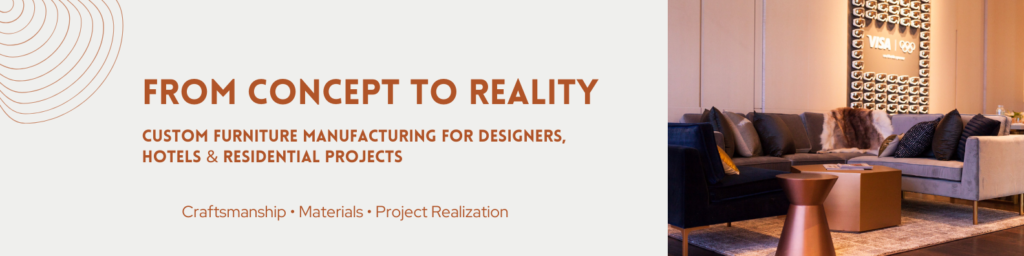
Interi Furniture specializes in custom furniture manufacturing for residential, hospitality, and commercial projects. Their experience in materials, craftsmanship, and project realization makes them a valuable resource for designers and buyers seeking tailored furniture solutions from China.