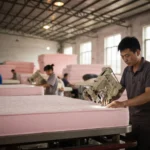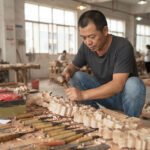


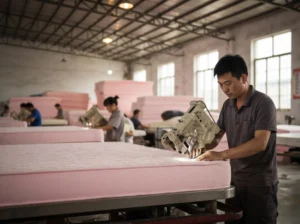

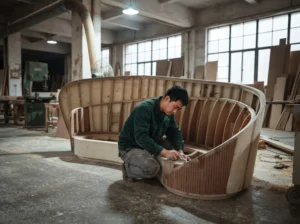
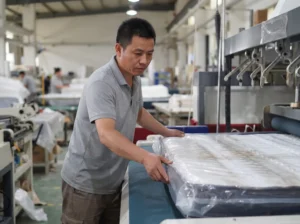





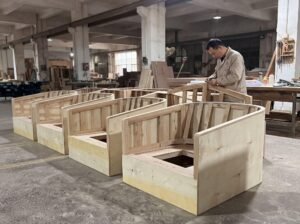
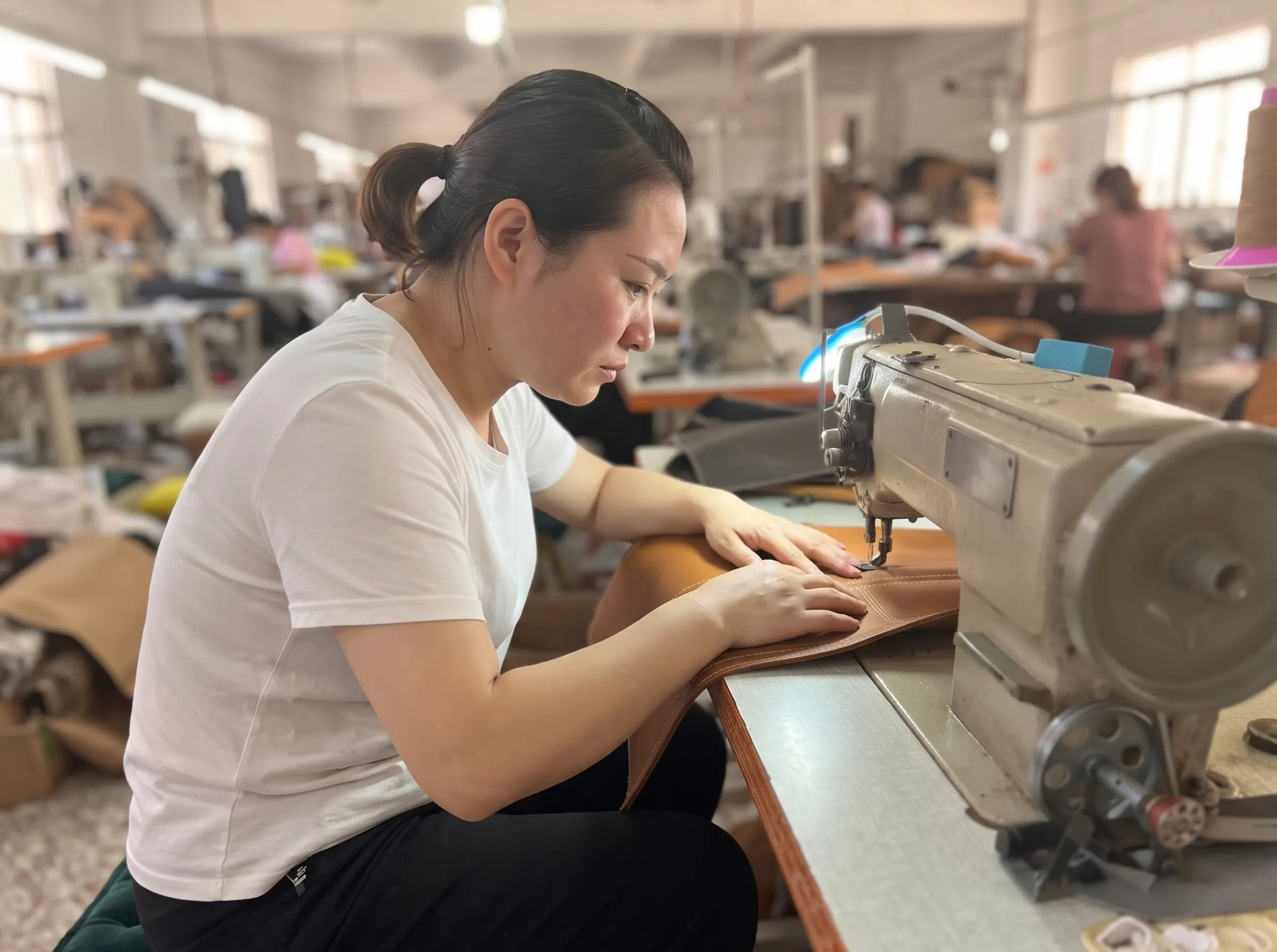
Ten years on factory floors in Foshan, Dongguan, and Nankang taught us this: the sofa with the star-spangled banner in the catalog was probably stitched in Longjiang. China still feeds the global furniture pipeline — Vietnam just gets the credit on the customs form. A mid-range sectional from a household US name? Odds are it left a container yard in Shenzhen, or got final screws in a Georgia warehouse after crossing the Pacific in pieces. “American brand” means American marketing, not American manufacturing.
Why Buyers Feel Misled by Origin Labels
We hear the same story weekly. A shopper drops $2,400 on a “Designed in California” sofa, imagines Pasadena craftsmen, then finds the law label reads Made in China. Frame cut in Dongguan. Foam poured in Shunde. Fabric sewn in Longjiang. The sting is not disappointment — it is the realization that someone deliberately blurred the line between design and manufacture.
Marketers know exactly what they are doing. “Designed in USA” hits the same emotional notes as “Made in USA” for most buyers. The FTC sees a legal canyon between the two. Consumers see a synonym. That gap is where the deception lives.
B2B buyers get hit harder. A developer specifying 200 units needs to know if that “American brand” delivers from domestic stock, or if they are quietly booking a container that sits at Long Beach for three weeks.
Brand and Factory: The Divorce
Here is the thing nobody tells you at the showroom: the brand and the factory are different companies. Full stop.
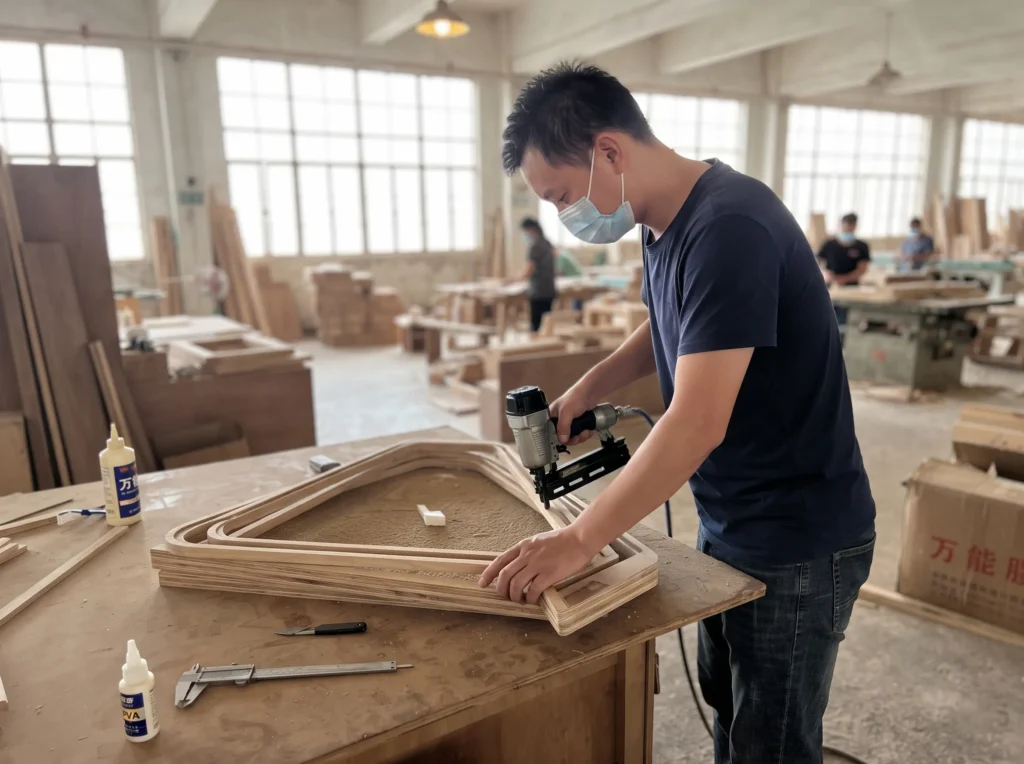
US furniture brands are design studios with Instagram accounts and distribution networks. The sawdust, welding sparks, and sewing machines live in factories they do not own, in cities they never name in the brand story. We have watched a Guangdong plant manager point to identical sofa frames headed for three different US labels — same bones, different fabric, different price tag. The brand sells curation and warranty peace of mind. The factory sells cubic meters and labor hours. Both make money when you look at the logo, not the GPS coordinates.
This is not a budget-brand problem. Walk into a premium DTC showroom and the supply chain map looks eerily similar. Same Pearl River Delta ecosystem. Same Chinese capital behind the Vietnamese factory. The difference is foam density and packaging design, not geography.
What “Made in USA” Actually Means Under FTC Rules
The FTC demands that unqualified “Made in USA” means “all or virtually all” domestic content — assembly, components, the works. They codified this in the 2021 Labeling Rule, and in March 2026 Trump signed EO 14392 telling the FTC to get aggressive on false claims. Warning letters followed. Civil penalties too.
But the FTC does not have enough investigators to read every carton in every warehouse. Marketers know this. They thread the needle with phrases that are technically legal and functionally misleading.
Origin Label Language: What It Actually Means Under FTC Rules
| Label Phrase | FTC Legal Standard | What It Actually Means for Furniture |
|---|---|---|
| Made in USA | “All or virtually all” US origin; negligible foreign content | Rare. Think custom upholstery shops, not retail sofas. |
| Made in USA with Imported Materials | Qualified claim; must specify the import | Domestic assembly, foreign steel or hardware. Common for metal frames. |
| Assembled in USA | Final assembly domestic; parts can be 100% foreign | The screwdriver special. Frame, foam, fabric shipped in; workers bolt it together in a US warehouse. |
| Designed in USA | Zero manufacturing requirement | Means the SketchUp file came from California. The factory is still in Dongguan. |
| Crafted in America | Implied claim; FTC checks if consumers assume US origin | Marketing perfume. Smells like patriotism, ships from Ningbo. |
| Made with Global Materials | Acknowledges foreign sourcing; no threshold | Tells you nothing about where it was built. |
For reference only, subject to official verification: Industry chatter and trade data suggest fewer than 5% of SKUs from major US retail brands clear the unqualified “Made in USA” bar. The rest lean on qualified claims, imported parts, or overseas factories.
Major US Furniture Brands: Where the Stuff Actually Comes From
These numbers come from SEC filings, import records, supplier gossip, and our own boots on factory floors. Directional, not gospel.
Major US Furniture Brands: Estimated China/Vietnam/US Production Mix
| Brand / Retailer | China | Vietnam | US/Mexico | Notes |
|---|---|---|---|---|
| Ashley Furniture | 5–10% | 45–55% | 30–40% | Massive Vietnam footprint; plants in Wisconsin and Mississippi; reportedly cut direct mainland China ties in 2025 |
| Wayfair (Private Labels) | 20–30% | 30–40% | 5–10% | Marketplace model; private-label lines Asia-heavy; exact mix undisclosed |
| La-Z-Boy | 5–10% | 10–15% | 70–80% | Strong US base in Missouri, Arkansas, Tennessee; shifting some Mexican lines back stateside |
| Ethan Allen | 5–10% | 10–15% | 70–80% | Company says ~75% North American-made; rest from Asia and elsewhere |
| Restoration Hardware | 15–20% | 30–40% | 15–25% | 2024 SEC filing: ~72% from Asia, Vietnam ~35%, China ~23%; targeting China down to ~2% |
| Pottery Barn / Williams-Sonoma | 15–20% | 15–20% | 15–25% | 2026 10-K: ~81% foreign-sourced, China ~19%, Vietnam ~16%; remainder from Europe, India |
| Article (DTC) | 40–50% | 20–30% | 5–10% | Asian factory partners; exact split not public |
| Burrow (DTC) | 15–25% | 20–30% | 10–20% | Vietnam, Poland, Mexico, India; US assembly on some lines; no public breakdown |
For reference only, subject to official verification: Best-guess numbers. Ethan Allen and RH have shared more detail in SEC filings than most. Your mileage varies by SKU and season.
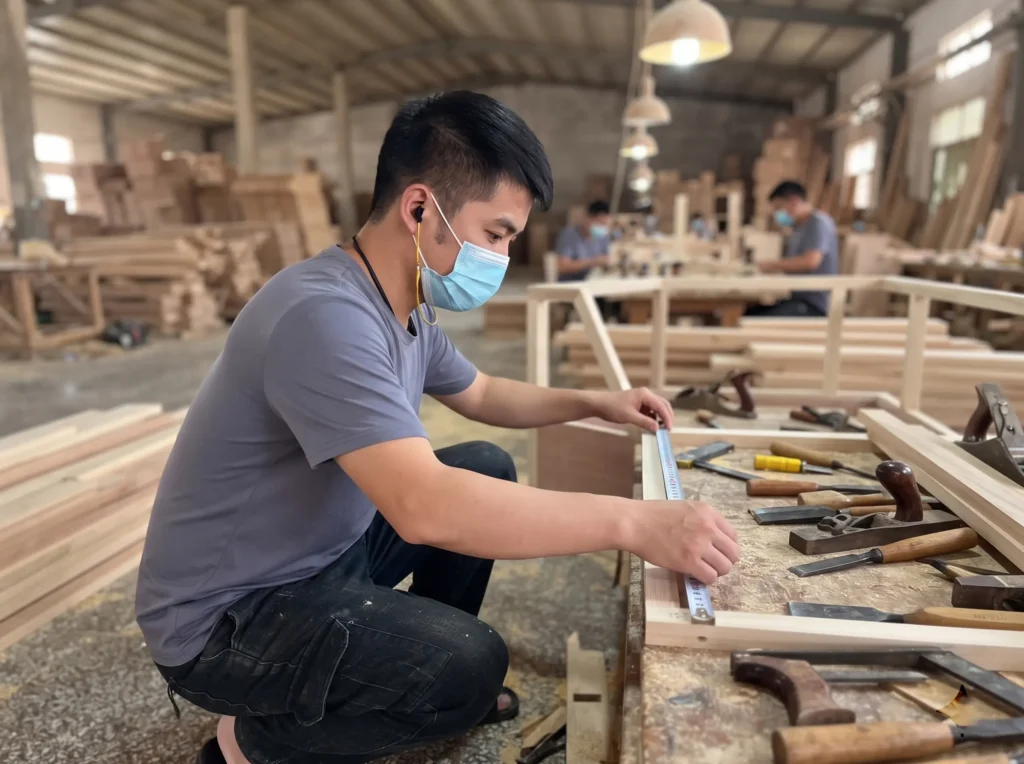
Who Really Controls the Product?
The myth that US brands just slap stickers on generic Chinese output dies hard. Reality is messier.
Brand vs. Factory: Who Controls Design, Molds, and Quality
| Control Point | US Brand Side | Factory Side | Who Wins? |
|---|---|---|---|
| Design | Brand spec (OEM) or picks from catalog (ODM) | Maintains ODM library; executes specs | Split. DTC brands design more; big boxes often buy ODM. |
| Molds | Brand pays; ownership negotiable | Keeps molds unless brand buys exclusivity | Factory. Mold retention is leverage. |
| QC | Brand sets AQL and testing rules | Runs daily QC; brand does pre-shipment spot checks | Factory executes. The gap between protocol and floor reality is real. |
| Exclusivity | Rare at mid-market; premium private label only | Serves multiple brands, same shift | Factory. True exclusivity demands volume most brands will not commit. |
| Pricing | Targets landed cost | Substitutes materials to protect margin | Factory. They control the shop floor in real time. |
We have stood in a Foshan facility watching the same frame get foam-packed for a $899 big-box SKU and a $2,499 boutique label. Different fabric. Different density. Same bones. The premium is packaging, not production.
The Vietnam Mirage
Vietnam topped China as the largest US furniture import source in 2025 — roughly 42% of import value versus China’s 16%. Real shift. Real growth (estimated $10.47 billion market in 2026). But here is what the headline misses.
A lot of Vietnamese furniture is Chinese furniture with a layover. Hardware, foam, fabric, engineered components — much of it crosses from Guangxi and Yunnan before final assembly in Binh Duong or Dong Nai. We have heard Vietnamese plant managers call it exactly what it is: “Chinese supply chain, Vietnamese labor, American label.”
US Customs cares about “last substantial transformation.” Cut, upholster, and finish in Vietnam, and the label says Vietnam — even if 60% of the component value started in China. Brands get to claim reduced China exposure without actually decoupling from Chinese inputs. For risk managers, that distinction matters.
Reshoring: The Story vs. The Floor
The reshoring narrative is great politics and bad arithmetic. Over 5,400 US furniture and fixtures makers employ roughly 269,000 people. Sounds impressive until you realize imports still dominate residential consumption, and domestic capacity is mostly commercial fixtures, office partitions, and custom work — not the sofa in your living room.
Reshoring Reality: What Has Actually Come Back to the US
| Category | Status | Reality Check |
|---|---|---|
| Residential upholstery | Minimal | Labor-heavy. US wages kill the math at mid-market prices. |
| Solid wood casegoods | Selective | Some revival in North Carolina and Maine. Niche, not volume. |
| RTA flat-pack | None | IKEA economics demand low-cost production. Still import-driven. |
| Metal frames | Partial | Section 232 steel tariffs pushed some outdoor/commercial metal back. |
| Mattresses | Mixed | Foam pouring and assembly returned; coils and covers often still imported. |
| Custom upholstery | Active | Small shops serve local markets. Cannot scale to national retail. |
For reference only, subject to official verification: Our read, based on factory visits and trade flow data, is that US-made furniture sits below 10% of residential consumption by volume. The rest comes in containers. All the reshoring talk has not moved that needle in any way you can see at retail.
Tariffs in 2026: The Messy Truth
The tariff picture is a legal patchwork. Section 232 holds at 25% on upholstered furniture and cabinets, with hikes to 30% and 50% pushed to January 2027. Section 301 adds 7.5% to 25% on Chinese goods. Then there is the Section 122 global 10% tariff — announced February 2026, struck down by the Court of International Trade in May 2026, currently on appeal. Legal limbo.
Here is what happens on the ground regardless of the courtroom drama. Brands do not eat tariffs. They pass them to you, or they quietly downgrade materials. That “premium” plywood? Now standard grade. Foam density? Down 10%. Same SKU description, slightly less product. You pay more. They keep margin.
Tariffs also accelerated country-hopping. China got hit, so production ran to Vietnam. Vietnam drew scrutiny, so some volume scattered to Indonesia, Malaysia, Cambodia. Now Chinese factory groups are setting up in Cambodian export zones. The label says Cambodia. The capital, management, and supply chain say China.
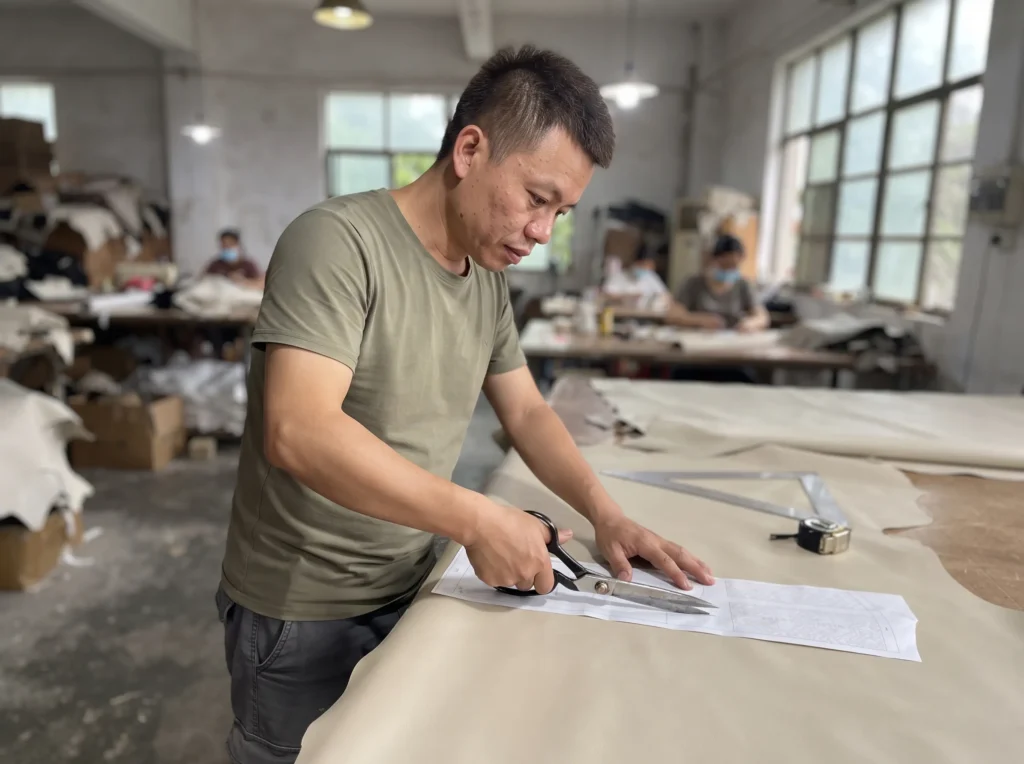
Red Flags: Reading Between the Marketing Lines
A few patterns we have learned to distrust.
American flags, bald eagles, heartland sunsets — with no explicit “Made in USA” claim? That brand is importing. The imagery triggers the association; the legal team avoids the liability. It is implied origin deception, and it works.
“Designed in [US City]” without a manufacturing disclosure? Read it as “Made Overseas.” Design is real value, but it is not manufacture. Brands lead with design location when they want you to forget production location.
“Crafted with Care.” “Built to Last.” Semantic airbags. No legal weight, zero geographic information, maximum emotional impact.
For B2B buyers, the question is not where it was designed. It is where the factory sits, who owns it, and what CBP considers the real country of origin. If your rep cannot answer clearly, you are buying blind.
What to Do About It
For American Consumers
Ignore the brand story. Flip the product over. Read the law label or the origin stamp. “Made in USA” unqualified? Rare. Anything else? Assume imported. Online, dig past the hero image into the specs. No factory name? That silence is an answer.
For B2B Retailers and Importers
Audit past the brand. Get factory names and addresses. Send a third party — SGS, Bureau Veritas, whoever you trust. Confirm the factory makes the goods, not some shadow subcontractor. Cross-check CBP entry docs against what you were told. The delta between assumed and actual origin is where compliance risk breeds.
For Brands and Private-Label Buyers
Treat origin claims as a legal file first, a marketing asset second. The FTC got sharper in 2026. Qualified claims need to be accurate, visible, and documented. Implied claims through imagery can still trigger enforcement. Build a paper trail. Assume you will need to defend it.

Frequently Asked Questions
How much US furniture is actually made in China?
By customs entry, China landed about 16% of US furniture import value in 2025 — way down from peak years, thanks to tariff-driven migration to Vietnam. But add Chinese-owned or Chinese-managed plants in Vietnam, Cambodia, and Malaysia. Add Chinese components feeding final assembly elsewhere. The indirect footprint is massive. We estimate US furniture China production still touches 35% to 50% of the mid-market residential segment when you count the full supply chain. For reference only, subject to official verification.
Is “Designed in USA” the same as “Made in USA”?
Not even close. “Made in USA” demands virtually all domestic content under FTC rules. “Designed in USA” means someone in California sketched it. The factory can be 100% overseas. No conflict. No surprise. Just two phrases that sound identical to shoppers and mean completely different things to regulators.
Why do American brands manufacture overseas?
Because the math is brutal. US labor, compliance, and real estate costs make mid-market residential furniture manufacturing economically impossible at current price points. Consumers vote with their wallets for affordable over domestic. Brands source from China and Vietnam because that is the only way to hit the price point the market demands. No conspiracy. Just arithmetic.
Are tariffs bringing manufacturing back?
Not for residential furniture. Tariffs rerouted sourcing — China to Vietnam to Cambodia — but they did not restart US factory towns. Section 232 at 25% stings importers; it does not make US production competitive for most categories. Reshoring works in automated sectors. Furniture is still too hands-on.
How do I find out where a piece was actually made?
Law label first — required on upholstered furniture in most states. Lists manufacturer and often origin. For casegoods, check packaging or the underside for a country stamp. Online, scroll past the brand manifesto to the product specs. Vague or missing? That is data. You can also pull CBP import records via ImportGenius or Panjiva to trace a brand’s containers. Takes work, but it works.
Are DTC brands more transparent?
Some are. Some use the DTC halo to imply ethical sourcing while pulling from the same factory pool as everyone else. Do not assume direct-to-consumer means domestic or transparent. Verify.
What Is Your Experience with Furniture Origin Transparency?
We have shown you what we see from the factory floor. Now tell us what you see from the showroom. Ever peeled back a law label and been surprised? Navigated this as a buyer? Leave your story below — we will answer with the same straight talk.
Recommended Resource
Interi Furniture specializes in custom furniture manufacturing for residential, hospitality, and commercial projects. Their experience in materials, craftsmanship, and project realization makes them a valuable resource for designers and buyers seeking tailored furniture solutions from China.