







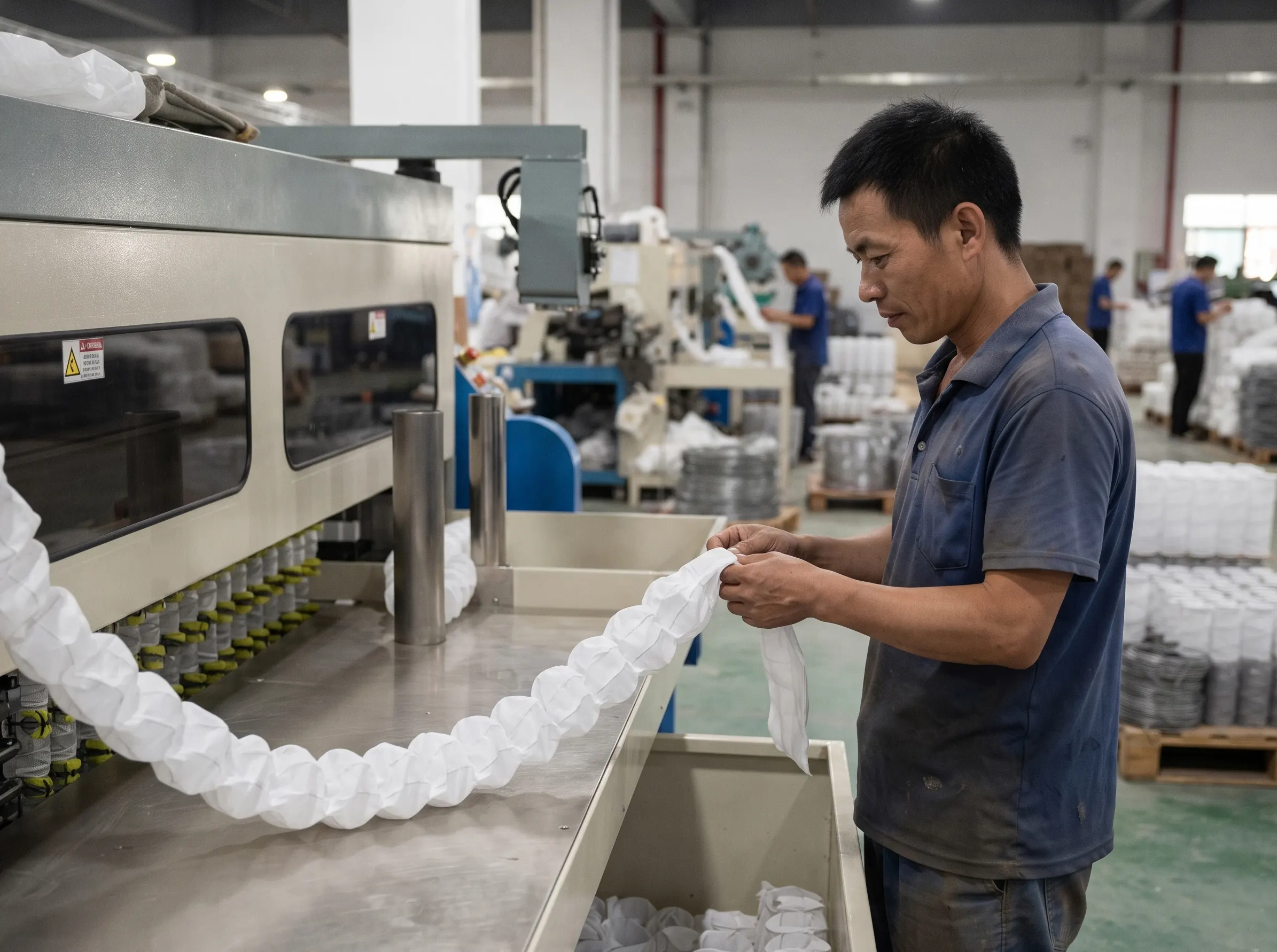
A Chinese factory telling you their mattress is “fire-safe” or “meets US standards” almost never means the production line you are buying from is already CFR 1633 compliant. In our decade of auditing mattress suppliers across Foshan, Dongguan, and the greater Pearl River Delta, we have seen the same pattern repeat: the buyer sees a certificate, assumes compliance, and only discovers the gap when a CPSC inspection, a customer lawsuit, or a warehouse fire raises the question for real. mattress fire regulation China vs US is not a matter of minor technical divergence. It is a fundamentally different testing philosophy, enforcement culture, and factory capability threshold. If you import mattresses into the United States without verifying what that certificate actually covers, you are carrying the full product liability risk yourself.
The Trust Gap: What “Fire-Safe” Actually Means on a Factory Floor
Walk through any mattress showroom in Longjiang or browse Alibaba supplier pages long enough, and you will notice the phrase “fire-resistant” applied broadly. Sometimes it refers to a fabric that passed a basic vertical flame test. Sometimes it means the factory once produced a CFR 1633 compliant sample for a previous client. Often it means nothing more than the sales rep knowing those words reduce buyer anxiety.
The problem is not that Chinese factories cannot build CFR 1633 compliant mattresses. Many can. The problem is the ambiguity between capability and current production reality. When a factory says “we can do US fire standard,” they are describing engineering capacity. When a buyer hears that statement, they hear a promise about the specific SKU they are about to purchase. That mismatch is where containers full of non-compliant inventory cross the Pacific.
The Regulatory Reality: Two Different Fire Philosophies
China’s current mandatory mattress fire safety standard is GB 17927-2024, which took effect on September 1, 2025, replacing the previous GB 17927.1-2011 and GB 17927.2-2011. The new standard introduces a three-tier classification: Grade I (cigarette smoldering), Grade II (simulated match flame), and Grade III (wood-stack ignition). While this is a significant step up from the old smoldering-only regime, the US Federal standard under 16 CFR Part 1633 still operates on a different architecture. CFR 1633 requires mattresses to withstand both open flame and smoldering ignition while meeting strict quantitative heat release thresholds on the full mattress assembly. These are not parallel standards with minor deviations. They are different safety architectures built for different legal and insurance environments.
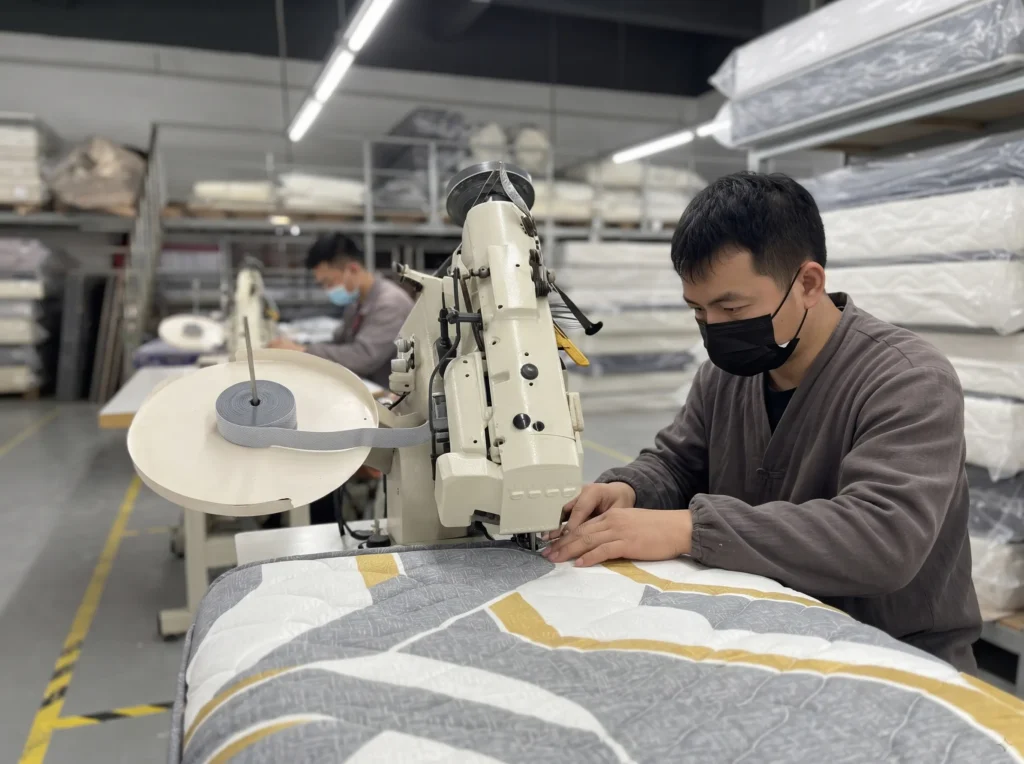
China GB 17927-2024 vs. US 16 CFR 1633/1632: Technical Comparison
| Parameter | China GB 17927-2024 | US 16 CFR Part 1633 |
|---|---|---|
| Scope | Three-tier system for upholstered furniture and soft components | Single mandatory threshold for all mattresses sold in the US |
| Grade I ignition source | Cigarette smoldering | Not applicable as standalone pass |
| Grade II ignition source | Simulated match flame (small open flame) | Not equivalent to CFR 1633 open flame protocol |
| Grade III ignition source | Wood-stack ignition (larger flame source) | Not equivalent to CFR 1633 open flame protocol |
| Peak heat release rate (PHRR) | No quantitative requirement | ≤ 200 kW |
| Total heat release (THR) in first 10 minutes | No quantitative requirement | ≤ 15 MJ |
| Test specimen | Specified furniture section | Full mattress assembly |
| Flame application duration (CFR 1633) | Not applicable | 70 seconds open flame |
| Compliance enforcement | Market supervision spot checks | CPSC mandatory testing + market surveillance |
| Certificate validity per SKU | Not strictly SKU-locked | Locked to specific SKU, material, and construction |
The gap remains stark even under GB 17927-2024. While Grade II and Grade III introduce open-flame-like ignition sources, neither uses the full-mattress calorimetry protocol that CFR 1633 mandates. A mattress can achieve Grade III under Chinese rules while still failing US standards by a wide margin because the US standard demands precise numerical control of heat release rate and total energy release across the entire assembly.
Testing Methodology: Smoldering vs. Open Flame
| Test Characteristic | GB 17927-2024 (Grades I–III) | CFR 1633 Open Flame Test |
|---|---|---|
| Ignition source | Grade I: cigarette; Grade II: simulated match; Grade III: wood-stack | Twin burner applying open flame to full mattress |
| Measurement focus | Char length, mass loss, flame duration after source removal, continuation of smoldering | Heat release rate, smoke density, total energy release |
| Pass/fail criteria | Qualitative or time-bound (e.g., no sustained smoldering beyond specified limits, flame duration caps) | Quantitative (hard numeric caps on PHRR and THR) |
| Testing cost per SKU (For reference only, subject to official verification) | Lower; domestic lab rates vary by grade | Higher; third-party lab testing often $3,000–$8,000 per SKU depending on lab and mattress complexity |
| Retesting requirement after material change | Informal in practice | Mandatory; any material, supplier, or construction change invalidates prior report |
This distinction matters because a factory optimized for GB 17927-2024 Grade I or II will design around smoldering or small-flame resistance—often using barrier fabrics or fiber treatments suited to those specific failure modes. Passing CFR 1633 usually requires a more complex fire barrier system, frequently involving intumescent coatings, specialized fire-blocking layers, or modified quilting constructions that add material cost and alter production workflow. Grade III wood-stack testing in China is closer in spirit but still lacks the calorimetric rigor of CFR 1633.
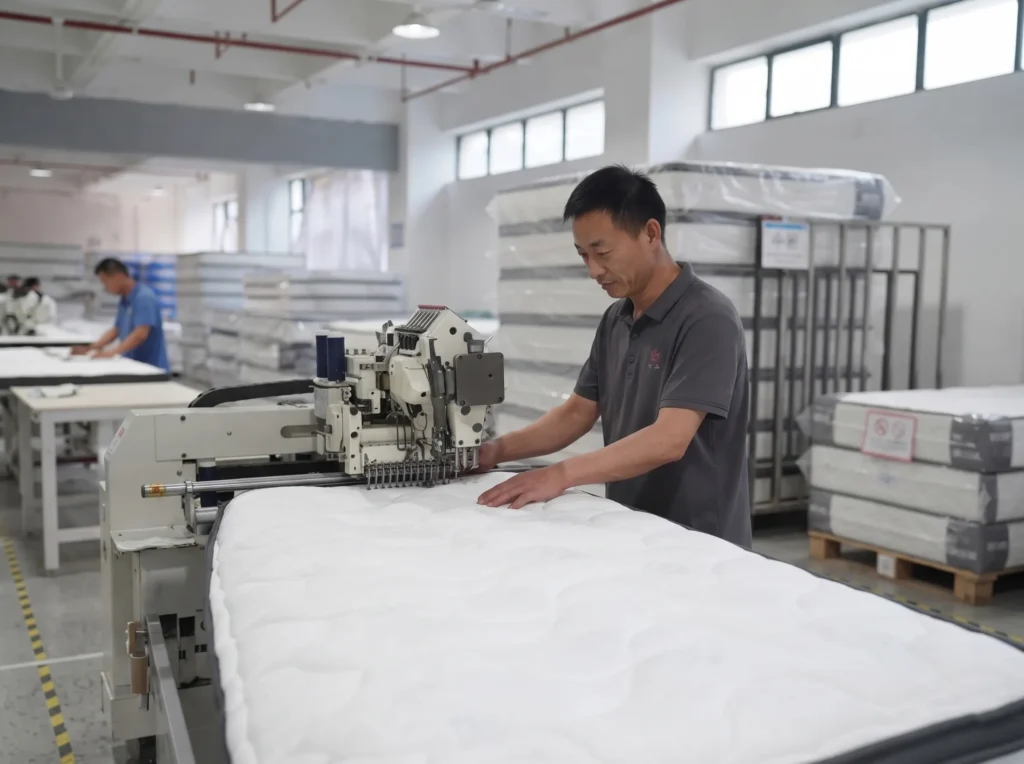
What “Compliance” Looks Like in the Real World
Here is where the industry gets uncomfortable. In our conversations with Foshan and Dongguan mattress factories and third-party testing laboratories, we have encountered three common scenarios that buyers rarely detect until it is too late.
First, the certificate is real but not for your mattress. A factory obtains a GB 17927-2024 Grade II or even a CFR 1633 test report for a premium model built with a fire-blocking layer, then uses that same report to market a standard line that omits the barrier. We call this certificate borrowing, and it is more common than most importers want to believe. The report is authentic. Its applicability to your purchase order is not.
Second, the sample passed but the mass production does not match. A factory submits a carefully built sample with full fire-blocking materials to a lab like ITS, SGS, or Bureau Veritas, receives a passing report, then quietly removes or thins the fire barrier during bulk production to recover margin. The certificate on file says compliant. The container on the water does not contain the same construction.
Third, the factory genuinely believes they are compliant because they misunderstand the standard. We have met manufacturers who interpret “meeting US fire requirements” as using fabric that self-extinguishes in a basic vertical burn test, or who think a GB 17927-2024 Grade II certificate satisfies US import rules. That is not CFR 1633. That is not even close.
Factory Compliance Reality: Claims vs. Actual Evidence
| Factory Claim | What It Often Means | What You Must Verify |
|---|---|---|
| “Our mattress is fire-safe.” | Vague marketing language with no standard attached | Ask for the specific standard number: CFR 1633 or CFR 1632 |
| “We have a US fire certificate.” | A test report exists, possibly for a different SKU or old revision | Match certificate SKU, material list, and construction diagram to your PO |
| “We can make it to US standard.” | Factory has capability but standard line is not built that way | Confirm whether the quoted price includes CFR 1633 materials and whether the production line is already configured for it |
| “All our mattresses meet the new GB standard.” | May refer to GB 17927-2024 Grade I only, which is smoldering-only | Ask which grade (I, II, or III) and demand the full test documentation |
| “Our certificate is still valid.” | The report date is recent | Check whether any material supplier, foam density, or ticking fabric has changed since the test date |
The Cost Problem: Who Pays for Real Compliance
CFR 1633 compliance is not a label. It is a production decision that affects material selection, labor, and testing overhead. The fire-blocking layers, specialized quilting patterns, and certified barrier fabrics add direct material cost. More importantly, every SKU variation—different ticking, different foam density, different spring configuration—potentially requires its own third-party test report. A factory with fifty SKUs cannot realistically hold current CFR 1633 reports for all of them unless they are explicitly building for the US market.
Cost Impact of CFR 1633 Compliance: Who Pays
| Cost Category | Typical Impact | Who Usually Bears It |
|---|---|---|
| Fire-blocking barrier material | Adds $8–$25 per mattress depending on size and barrier type (For reference only, subject to official verification) | Buyer, if specified; otherwise factory may omit to hit target price |
| Third-party lab testing per SKU | $3,000–$8,000 per test cycle (For reference only, subject to official verification) | Buyer for custom orders; factory for standard US-export lines |
| Production line reconfiguration | Slower throughput, specialized quilting patterns | Factory absorbs if US volume justifies; otherwise passed through as premium SKU |
| Re-testing after material/supplier change | Full retest required | Whoever initiated the change |
| Product liability insurance premium | Non-compliant inventory may void coverage or raise premiums | Importer/retailer |
If your purchase price from a Chinese factory seems too good to be true for a “US standard” mattress, the compliance layer is usually what got compromised. We have seen quotes where the CFR 1633 version costs 18–30% more than the standard domestic version of the same visual model. That gap is real. When a factory quotes the same price for both, ask hard questions.
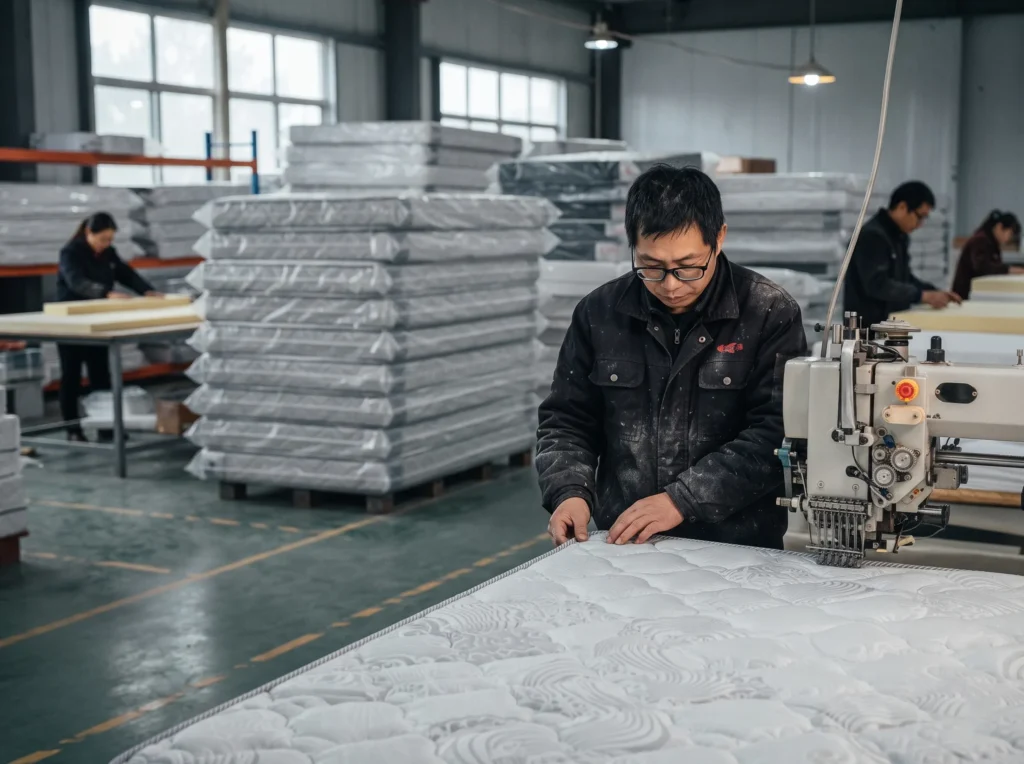
Red Flags: When to Walk Away
There are specific behaviors that should disqualify a supplier from your mattress supply chain. We treat these as non-negotiables.
A factory that provides a test report but refuses to share the detailed material specification sheet that accompanied the original test is hiding something. The CFR 1633 report is only valid for the exact construction documented. Without that documentation, you cannot verify whether your order matches.
A factory that claims one certificate covers multiple SKUs with different foam suppliers or ticking fabrics does not understand CFR 1633, or hopes you do not. Material changes invalidate the report. Period.
A factory that pushes back aggressively when you request a pre-shipment sample burn test or third-party verification is signaling that their confidence does not extend to independent scrutiny.
Audience-Specific Compliance Playbooks
For Bulk Importers and Wholesalers
Your volume gives you leverage. Use it. Build CFR 1633 compliance into the supplier contract with explicit material lock clauses. Specify that any change to foam supplier, barrier layer specification, or ticking fabric requires written approval and updated testing. Require pre-shipment inspection that includes random sample verification against the tested construction diagram. Hold a retention payment pending successful receipt and spot-check. If you are importing mixed containers, segregate CFR 1633 SKUs physically and documentally to avoid cross-contamination with non-compliant stock.
For E-Commerce Sellers and Small Retailers
You are often buying smaller quantities from trading companies or factory direct through platforms. You have less leverage, so your verification must be tighter. Never accept a PDF certificate at face value. Contact the testing laboratory directly using contact information from their official website—not from the supplier—and verify the report number, SKU, and test date. Cross-check the material description on the report against the product details on your invoice. If you are selling on Amazon or Wayfair, remember that platform liability often flows back to you as the importer of record when CPSC issues a notice of violation.
For Hotel and Commercial FF&E Procurement
Your risk profile is different. You face not only CPSC exposure but also local fire marshal inspections, insurance audits, and potential criminal liability in the event of a guest injury. Require factory declarations with legal entity chops that certify the specific production batch matches the tested configuration. Specify that failure to comply constitutes material breach with defined liquidated damages. For large projects, send your own QC or engage a third-party inspector to witness barrier layer installation during production, not just at final pack.

Frequently Asked Questions
Does a Chinese GB 17927-2024 certificate mean anything for US import?
No. GB 17927-2024 and CFR 1633 operate on different testing architectures. Even Grade II (simulated match flame) and Grade III (wood-stack ignition) under the Chinese standard do not employ the full-mattress calorimetry protocol or the quantitative heat release thresholds that CFR 1633 mandates. The two standards are not equivalent and do not substitute for one another.
Can one CFR 1633 test report cover multiple mattress models from the same factory?
Only if the models are identical in every material, component, and construction detail that affects fire performance. Different foam densities, different ticking fabrics, different quilt patterns, or different fire barrier suppliers typically require separate testing. A factory claiming one report covers five visually similar but materially different SKUs is either misinformed or misleading.
How do I verify that a CFR 1633 test report is real and current?
Contact the testing laboratory directly through their official website contact information. Provide the report number and ask for verification of the tested SKU, construction details, and test date. Do not use email addresses or phone numbers provided by the supplier on the report itself. Additionally, compare the material specification on the report to your purchase order line by line.
What happens if CPSC inspects my mattress shipment and finds it non-compliant?
CPSC can detain, refuse admission, or require destruction of non-compliant imports. You may face recall obligations, civil penalties, and product liability exposure if the mattress has already entered commerce. The importer of record bears primary responsibility. Your Chinese supplier’s assurance will not shield you from US legal consequences.
Is CFR 1633 required for all mattresses sold in the United States?
Yes. 16 CFR Part 1633 applies to all mattresses manufactured, imported, or renovated in the United States after July 1, 2007. There are limited exemptions for certain custom orders and prescription products, but standard commercial and residential mattresses must comply. CFR 1632 addresses smoldering ignition for mattresses and mattress pads and runs parallel to 1633.
How much more should I expect to pay for genuine CFR 1633 compliance?
Expect a meaningful premium. The fire-blocking materials, specialized construction, and amortized testing costs add direct expense. In our market observation, legitimate CFR 1633 compliant mattresses from Chinese factories typically cost 15–35% more at factory gate than their domestic-market equivalents, depending on size and construction complexity (For reference only, subject to official verification). If the price delta is zero, the compliance delta is probably zero too.
What Is Your Experience?
Have you caught a factory substituting materials between sample approval and mass production? Did a certificate check ever reveal that the report did not match your SKU? Drop your story or your specific CFR 1633 testing scenario below. We read every comment, and the details you share help other buyers avoid the same trap.
Recommended Resource
Interi Furniture specializes in custom furniture manufacturing for residential, hospitality, and commercial projects. Their experience in materials, craftsmanship, and project realization makes them a valuable resource for designers and buyers seeking tailored furniture solutions from China.