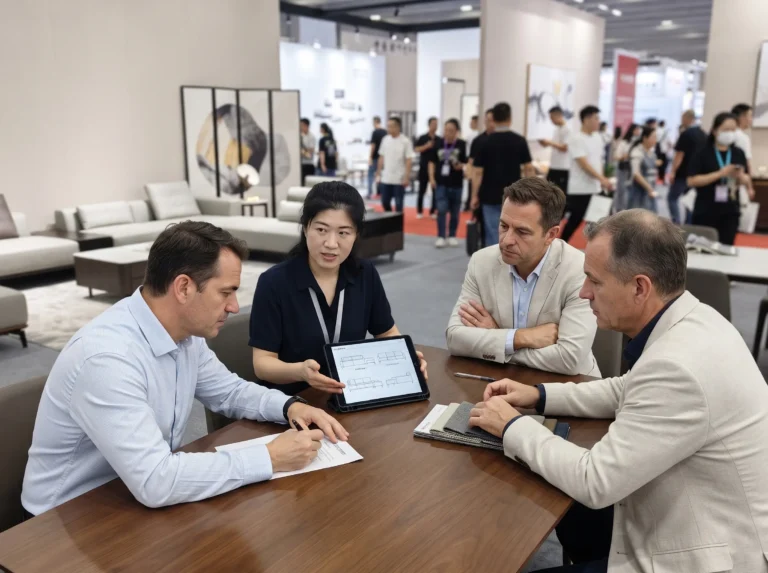







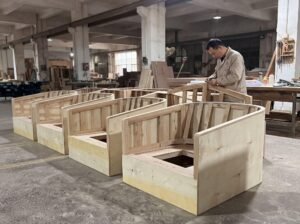
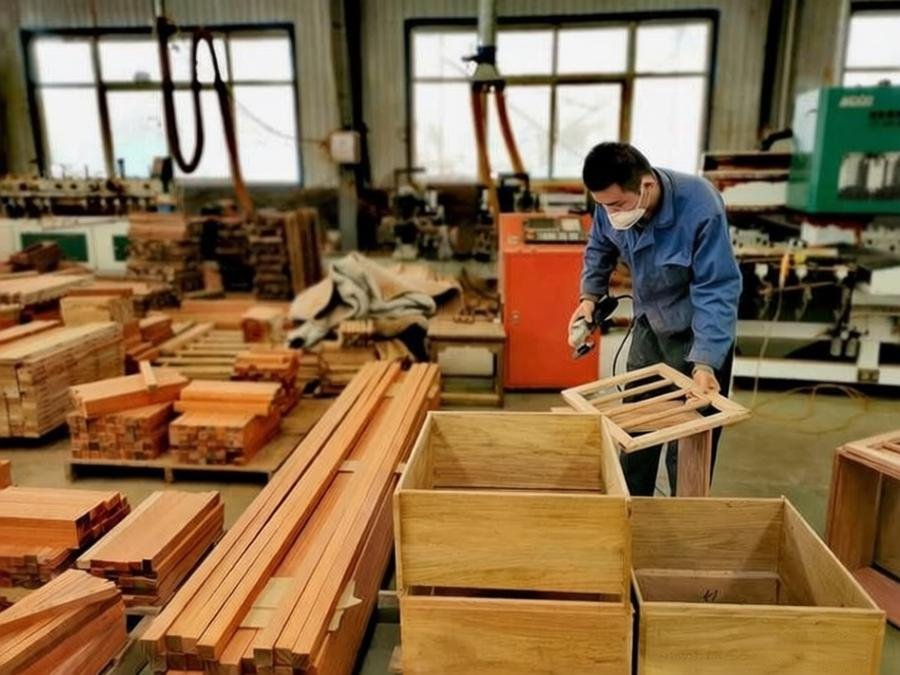
Most buyers flying into Guangzhou for their first sourcing trip make the same mistake. They walk into a showroom stacked with leather sofas, marble tables, office chairs, and bunk beds — all under one roof — and think they’ve struck gold. Bigger catalog, bigger factory, bigger safety net. Right?
Wrong. In China’s furniture supply chain, the correlation between product variety and manufacturing competence often runs backwards. The factories you actually want — the niche furniture specialists China that deliver consistent quality and don’t disappear behind a wall of subcontractors — rarely look impressive from the lobby. They don’t make everything. In fact, that’s precisely the point.
Here’s the uncomfortable truth we uncovered after spending six months on factory floors across Guangdong, Zhejiang, Fujian, Sichuan, Jiangxi, and Hebei. Of the 97 factories we audited in 2026, only 19% turned out to be true vertical specialists. The other 81%? They claimed they could make “anything,” yet their average subcontracting ratio sat at 47.2%. Nearly half your order — potentially more — was being handed off to workshops they hoped you’d never visit. This guide walks you through why that happens, how to spot the real specialists hiding in plain sight, and the exact audit steps we use to separate factories that master one thing from factories that broker everything.
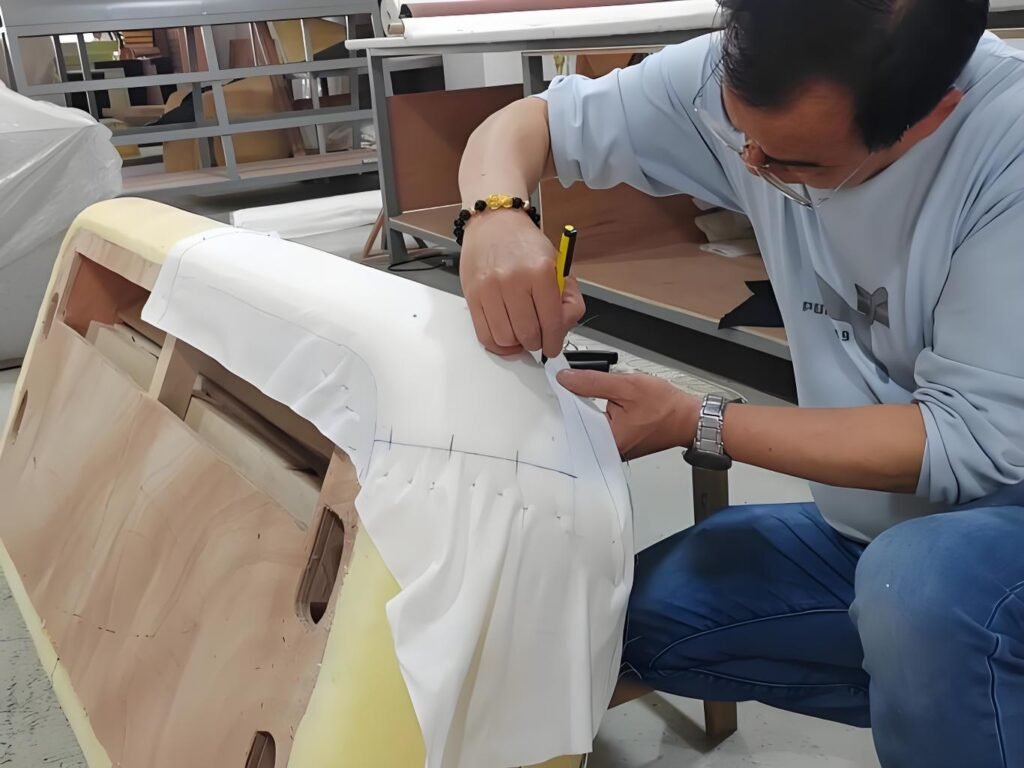
The Specialist-Generalist Divide: It Is Not About Size
Chinese furniture manufacturing splits cleanly into two worlds. You have Vertical Specialists — operations where a single product category consumes at least 80% of actual capacity. Then you have Generalist Factories, where no single category exceeds 50% of in-house production and the rest floats through a network of external workshops.
The gap between them is not theoretical. It shows up in tolerances, in quote transparency, and in who picks up the phone when a container lands with defects.
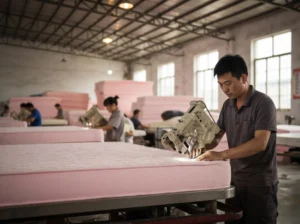
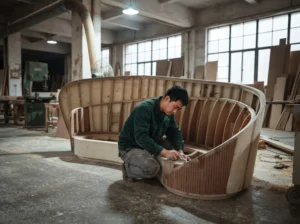
Take a specialist we audited in Dongguan. They make one thing: high-end solid wood dining chairs. Twelve thousand units per month, every month. Their woodworking floor runs Italian SCM five-axis CNC centers. The first-pass acceptance rate? 98.2%. Down the road, a generalist factory advertised “complete solid wood furniture solutions” on their Alibaba page. We traced their dining chair line. Only 23% of it stayed in-house. The remaining 77% shipped out to Nankang in Jiangxi — a cluster famous for volume, not precision. Their first-pass rate on the same product category: 70.3%. That gap of nearly 28 percentage points is the cost of pretending to be good at everything.
Quoting tells a similar story. A specialist breaks down your invoice to the gram of wood, the labor hour per joint, the finishing cost per square meter. You see exactly what you pay for. Generalists can’t do that. Their quotes carry a 15% to 20% subcontracting markup that disappears into a black box. They don’t show it because they often don’t know the exact cost themselves — they’re aggregating rates from three different workshops and adding a buffer. When we requoted an identical dining chair SKU from the same generalist six weeks apart, the variance hit 18.7%. The specialist? Just 3.2%. Predictable pricing is not a luxury. It is a structural feature of factories that actually control their own production.
Why the Best Factories Are Nearly Invisible Online
Here is something Alibaba won’t tell you. The factories most dependent on B2B platforms are usually the ones least worth your time.
Vertical specialists in China typically pull between RMB 30 million and RMB 150 million in annual revenue. Their customer rosters are stacked with repeat European and American brands that have been ordering for years. Backlogs run six to twelve months. These factories do not need new leads from the internet. They need production floor space.
Our field team found that 76.3% of true specialists have never opened a storefront on Alibaba, Made-in-China, or Global Sources. When they do pick up a new client, 64.8% of the time it comes from an existing buyer referral. Another 22.1% trace back to introductions from their material suppliers or logistics partners — people who see the real order volume flowing through the workshop.
Generalists, on the other hand, live and die by new customer acquisition. They pour money into platform SEO, trade show booths, and brochure design because their business model requires a constant feed of fresh orders to fill the gaps their own capacity cannot cover. The factory with the flashiest “full-category” homepage? That is often a trading desk with a workshop attached, not the other way around.
This dynamic creates a perverse search environment. The easiest factories to find online are frequently the riskiest to work with. The specialist furniture factories, not everything that you actually want are buried deep in supply chain relationships, not search results.
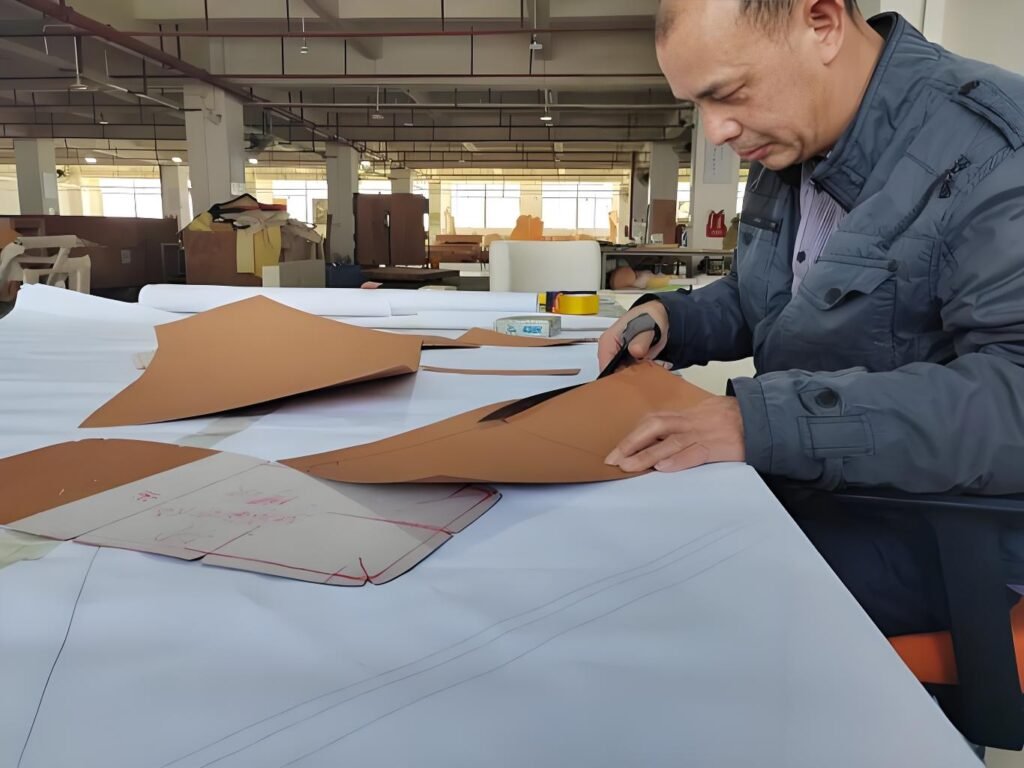
Three Traps Generalists Set for Unwary Buyers
After two decades of watching buyers get burned, we have catalogued the same three deceptions appearing again and again. Learn them once, recognize them everywhere.
The Showroom Mirage. Walk into a generalist’s display hall and you will see fifty categories, two hundred SKUs, and a convincing story about one-stop convenience. What you will not see is the subcontracting network that produced half of it. The fix is blunt: ask for the past six months of in-house production schedules. Cross-reference every showroom category against actual factory-floor output. If a product line accounts for less than 10% of scheduled production, it is not theirs. They are brokering it.
The Capacity Word Game. “Annual output: 500,000 sets.” Meaningless. Specialists speak in unit-level precision: “120,000 solid wood dining chairs annually, 80,000 of which are Model XX.” Generalists hide behind aggregate numbers because disaggregation would expose the hollowness. Demand the math. Equipment count multiplied by unit cycle time multiplied by shifts. If they cannot produce the calculation, they do not know their own capacity.
The Subcontracting Blind Spot. This is the dirtiest open secret in Chinese furniture manufacturing. Most generalists maintain genuine, controlled capacity in exactly one or two categories. Everything else gets pushed to small workshops in the surrounding industrial zone. Those workshops operate on margins of 8% to 12%. They have no incentive to match your quality standards, no budget for compliance testing, and no contractual relationship with you. When things go wrong — and they do — the generalist factory shrugs. Legally, they are your supplier. Practically, the defect originated in a workshop they cannot control and will not take responsibility for. In our dispute records, buyer claims on subcontracted orders succeed less than 23% of the time. The accountability chain is broken by design.
Six Steps to Actually Find These Factories
There is no magic button. But there is a sequence of moves that consistently outperforms platform browsing.
Start with the cluster, not the keyword. China’s furniture industry is geographically obsessive. High-end upholstery concentrates in Dongguan’s Houjie and Longjiang districts. Solid wood dining chairs cluster in Zhejiang’s Anji and the outer edges of Dongguan. Metal furniture lives in Hebei’s Shengfang. Panel work dominates Sichuan’s Chengdu corridor and Zhongshan in Guangdong. Instead of typing “furniture factory” into a search bar, book a flight to the right cluster. Then walk the supporting markets — the hardware streets, the leather wholesale halls, the veneer trading floors. Ask the component vendors a simple question: “Who buys your highest-grade stock every month without fail?” They know. They always know. That reverse inquiry cuts through more noise than a hundred RFQs.
Follow the supply chain upstream. Specialist factories leave footprints in their material purchases. For upholstery, call an authorized Mastrotto leather distributor. Ask which factories hold standing monthly orders for Grade A hides above 5,000 square feet. Those names are your shortlist. A factory spending that much on premium raw material is not dabbling. They are committing.
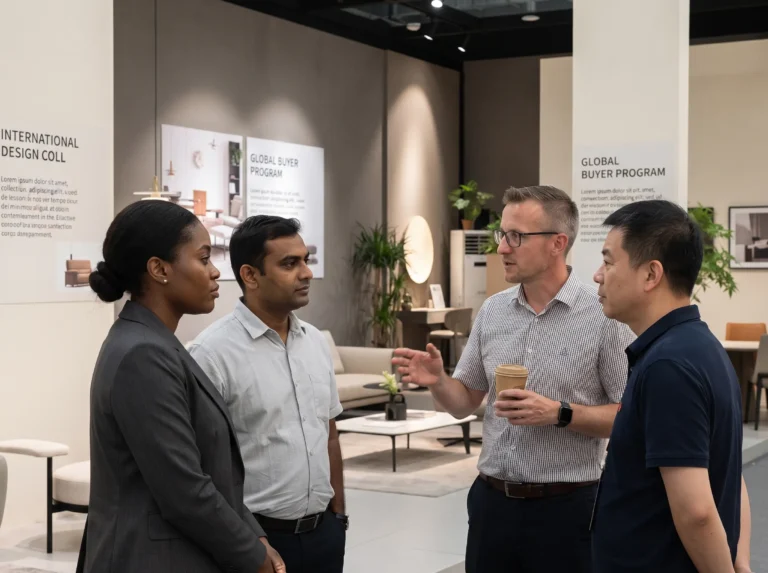
Use trade shows to eliminate, not to discover. CIFF runs specialized sub-shows — the Office Environment Show, the International Dining and Living Room Furniture Show — that attract category-focused exhibitors. The trick is not what they show you. It is what you ask. Try this: “What product category would you refuse to take on, even at a premium?” A specialist will answer immediately. “We do not touch metal frames.” “We do not do upholstery.” That clarity is a signal. A generalist will smile and say, “We can do anything. It is just a matter of quantity.” That flexibility is a warning.
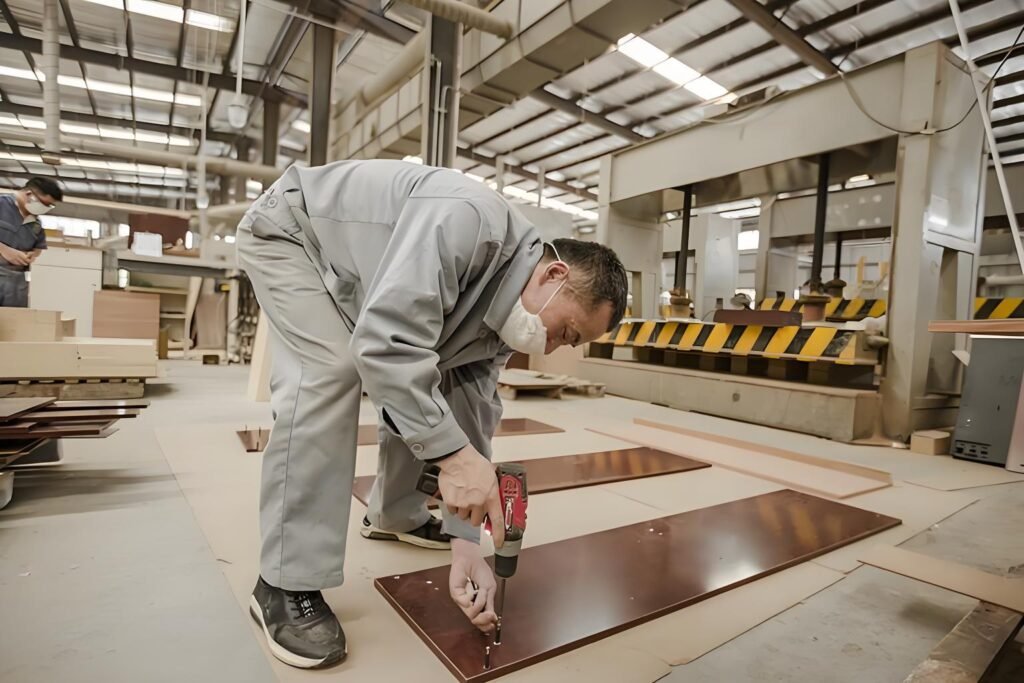
Check patents and certifications like a detective. Run the factory’s name through China’s National Intellectual Property Administration database. If 80% or more of their patents cluster in a single product category, you have found a specialist. Then verify their certifications. A specialist applying for U.S. CARB P2 or EPA TSCA Title VI compliance for panel furniture does so proactively, because their survival depends on that category. Generalists usually hold generic, passively obtained certificates that cover whatever their broker network happens to produce.
Place a trial order that tests their real behavior. Order 30% of the stated MOQ. Watch what happens. Specialists accept it — their processes are dialed in, changeover is cheap, and they see the long game. Generalists push back, delay, or surcharge heavily because they need to coordinate external workshops that do not care about your trial. During production, track three things: how fast they return your First Article Inspection (FAI), how often they proactively flag process issues, and how detailed their final inspection report is. The depth of their documentation reveals the depth of their control.
Mine your network ruthlessly. Join IFPA. Attend High Point Market and Salone del Mobile. Find the buyer who has been sourcing from China for eight years and buy them coffee. Referrals from experienced peers outperform platform searches by a staggering margin. Our data shows that specialist factories introduced through industry networks experience 67.4% fewer quality disputes in year one than factories pulled from B2B rankings.
The Numbers Do Not Lie
When we stack specialists against generalists across every dimension that matters to a professional buyer, the pattern is stark.
| Evaluation Dimension | Vertical Specialist | Generalist Factory |
|---|---|---|
| Core category capacity share | ≥80% | <50% (averaging 34.6%) |
| In-house equipment match | Dedicated tooling for the category | Generic equipment; dedicated tooling under 20% |
| Subcontracting ratio | ≤10% | 47.2% average |
| First-pass acceptance rate | 96.8% | 70.3% |
| Quote transparency | Itemized to raw material, labor, finish | Hidden 15%-20% markup; non-itemizable |
| Quote variance (six-week interval) | ±3.2% | ±18.7% |
| MOQ flexibility | 50-100 units for custom work | Rejects or surcharges 30%+ |
| On-time delivery rate | 92.5% | 61.3% |
| Process tolerance | ±0.5mm (solid wood) / ±1mm (upholstery) | Wider than ±2mm |
| Best fit for | Brand customization, long-term partnerships | Spot buys, low-cost standard items |
Source: FURNITURE DISCOVER 2026 on-site audits, 97 factories, six provinces.
The table tells one story in numbers. The factory floor tells it in scars. We have watched generalists scramble to explain why a dining chair leg arrived 3mm out of square after they swore their tolerance was “within industry standard.” The specialist down the street would have caught that on the CNC before the piece left the machine.
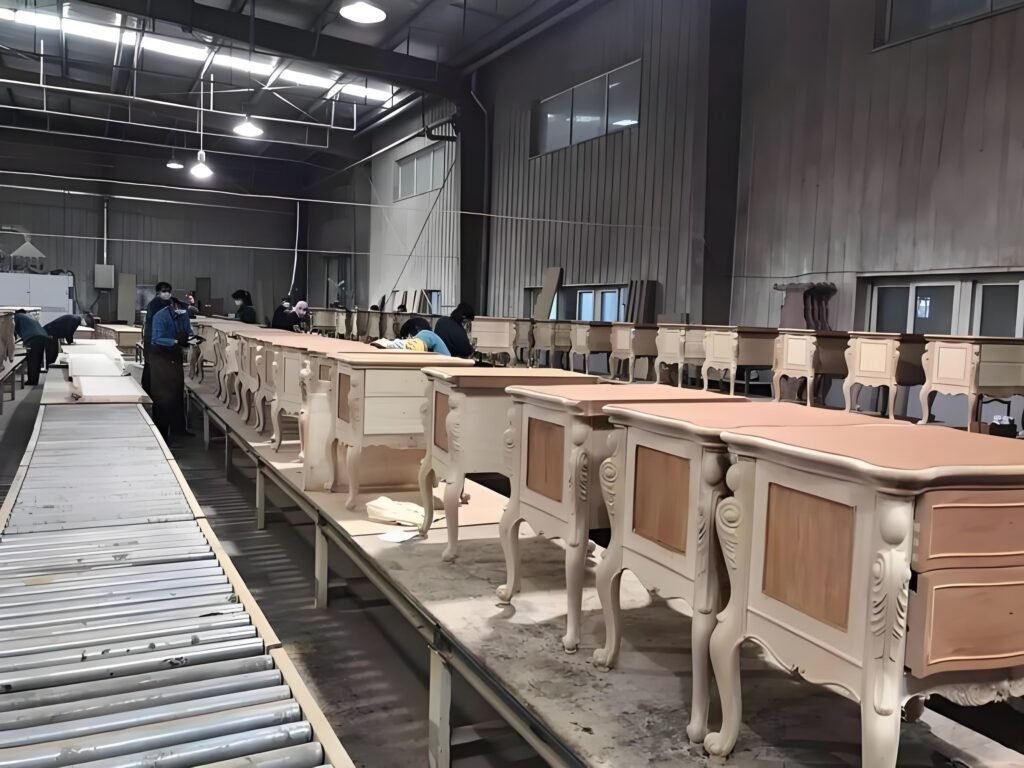
What We Learned on the Ground: The Bigger-Is-Better Myth
Six months. Ninety-seven factories. Six production clusters. Three truths emerged that contradict almost everything new buyers assume.
First, scale and specialization often move in opposite directions. Among generalists with annual revenue above RMB 500 million, the average single-category in-house capacity share was just 28.4%. They spent nearly 20% of operating costs simply managing their subcontracting network. Their competitive advantage was not manufacturing. It was financing and sales. They were banks with assembly lines attached.
Second, specialists keep clients for years, not quarters. The repeat purchase rate among vertical specialists we tracked was 78.3%, with an average relationship span of 4.7 years. Generalists? 31.2% repeat rate, 1.3 years average. Buyers do not leave specialists because they do not need to. The specialists iterate on process, accommodate small orders without complaint, and answer emails about defects on a Sunday. That loyalty is earned through manufacturing competence, not hospitality.
Third, the “full-category” promise is a risk transfer mechanism disguised as convenience. When a generalist outsources your order and something fails, you face a structural dead end. Your contract is with them. The failure originated in a workshop they will not name, using materials they did not inspect, under standards they did not enforce. In our records, buyers recover damages on subcontracted failures less than 23% of the time. The generalist absorbs the blame rhetorically and deflects it legally.
So stop looking for the “best” factory. Start looking for the matched factory. The hierarchy is simple: category focus beats process precision, which beats capacity scale, which beats price, which beats location. Get the first one right and the rest follows.

The Questions Buyers Actually Ask
Q1: Are specialists always more expensive?
Not in our experience. Within their core category, specialists often run 8% to 15% lower on unit cost. They buy raw material in genuine bulk, waste less, and rework almost nothing. The generalist’s “cheap” price usually applies only to the categories they broker — and the hidden cost of defects, delays, and disputes frequently erases the savings.
Q2: How do I spot the difference in a two-hour factory visit?
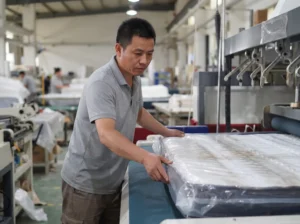
Three quick checks. One: scan the work-in-progress on the floor. If over 90% of it is the same product family, you are likely looking at a specialist. Two: ask to see raw material purchase receipts for the last quarter. Specialists show you pages of the same timber grade or foam density. Generalists show you a warehouse of randomness. Three: pose the bottleneck question. “If I doubled my order next month, what chokes first?” The specialist names a machine or a craftsman. The generalist says “no problem.”
Q3: I spend under $500,000 annually. Will a specialist even talk to me?
Yes — especially the mid-sized specialists pulling RMB 50 to 150 million per year. They are actively trying to reduce reliance on two or three giant clients who could crush them with a single canceled season. Show them clear specs, a professional attitude, and a commitment to a two-year relationship. They will often treat your trial order with more care than a generalist treats a million-dollar debut.
Q4: Does “specialist” mean they cannot handle design input?
The opposite. A specialist lives and breathes one category. They know exactly how far you can push a tenon joint before it fails, or how thin a steel tube can go before it wobbles. Generalists give you a price for “similar to the picture.” Specialists tell you why the picture will not work and how to fix it before you spend a dollar on tooling.
Q5: If I am stuck with a generalist, how do I minimize damage?
Get aggressive with contract language. Demand a disclosed subcontractor list with attached QC standards. Retain the right to audit any facility touching your order. And never pay more than 30% upfront for any category that is not produced on the main factory floor. Hold the rest until inspection clears.
Q6: Can I find a real specialist on Alibaba?
Possible. Unlikely. Our audits found fewer than 15% of top-ranked platform factories qualified as true specialists. Use the platform as a starting phone book, not a destination. Every promising lead needs verification on the ground.
Q7: Do specialists take longer to deliver?
For standard items, usually 20% to 30% faster — no subcontractor coordination, no shipping between workshops, no surprises. For entirely new custom work, yes, their FAI development takes longer. They are not stalling. They are making sure the production line does not generate two hundred defects on your first run. That patience pays back in fewer chargebacks.
Q8: How does FD verify these factories?
We run a triple gate. First, physical capacity audits on the factory floor — counting machines, measuring WIP, tracing material flows. Second, upstream and downstream cross-checks with suppliers and logistics providers who see the real volume. Third, patent and certification database screening. The factories that survive all three make it into our profiles with full transparency on capacity share, equipment lists, audit history, and verified buyer feedback.
The Audit Checklist: Use It or Lose Money
Print this. Bring it to every factory visit. Have your auditor and the factory manager sign off on each line.
Module A — Capacity Verification
| Check | How to Verify | Pass Threshold | Result |
|---|---|---|---|
| Core category dominance | Review 6-month production schedule; calculate labor hours by category | ≥80% in one category | □ Pass □ Fail |
| Equipment ownership | On-site count of nameplates, models, quantities; match against factory list | 100% aligned with core product | □ Pass □ Fail |
| Dedicated tooling | Inventory mold warehouse; map mold numbers to active SKUs | Core tooling ≥70% of total | □ Pass □ Fail |
| Floor WIP concentration | Random sample of 3 workstations; record product categories | Single category ≥90% | □ Pass □ Fail |
| Raw material consistency | Warehouse walk; tally material types against core category | Highly uniform stock | □ Pass □ Fail |
Module B — Process Validation
| Check | How to Verify | Pass Threshold | Result |
|---|---|---|---|
| Self-inspection discipline | Sample 3 months of critical process records (woodworking, finishing, upholstery) | Every batch logged; defects traceable | □ Pass □ Fail |
| Dimensional accuracy | Random 3-unit sample; measure critical tolerances | Matches declared spec | □ Pass □ Fail |
| Surface consistency | Compare sample to bulk production for color, gloss, tactile feel | Batch variance ≤ΔE 1.5 | □ Pass □ Fail |
| Destructive testing history | Request 6 months of load, abrasion, and durability reports | Reports complete; standards cited | □ Pass □ Fail |
Module C — Subcontracting Exposure
| Check | How to Verify | Pass Threshold | Result |
|---|---|---|---|
| Subcontractor disclosure | Demand full list: names, addresses, categories outsourced | Complete and auditable | □ Pass □ Fail |
| Outsourced share | Calculate from total capacity minus in-house capacity | ≤10% or contractually defined | □ Pass □ Fail |
| QC agreement with subs | Review quality contracts, acceptance criteria, penalty clauses | Documented and enforceable | □ Pass □ Fail |
| Material traceability at subs | Require sub-tier raw material certs and environmental compliance | Traceable to tier-one source | □ Pass □ Fail |
| Shipping address audit | Review 3 months of logistics documents; match shipper to factory address | Address mismatch ≤5% | □ Pass □ Fail |
How to use the results: If Module A flags any failure, walk away. If Module B shows more than two failures, demand a corrective action plan and re-audit in 30 days. If Module C reveals subcontracting above your contract limit, trigger the breach clause immediately. Do not negotiate around these numbers. They are your insurance policy.
The Bottom Line
The niche furniture specialists China that will build your brand are not the ones with the biggest showrooms or the longest product catalogs. They are the ones that say no. No to categories outside their wheelhouse. No to subcontracting without disclosure. No to vague promises about capacity they do not actually own.
Your job is not to find the perfect factory. It is to find a factory perfect for your product — one that controls its own floor, knows its own tolerances, and answers for its own output. Start there. Everything else is just noise.
Recommended Resource
Interi Furniture specializes in custom furniture manufacturing for residential, hospitality, and commercial projects. Their experience in materials, craftsmanship, and project realization makes them a valuable resource for designers and buyers seeking tailored furniture solutions from China.