









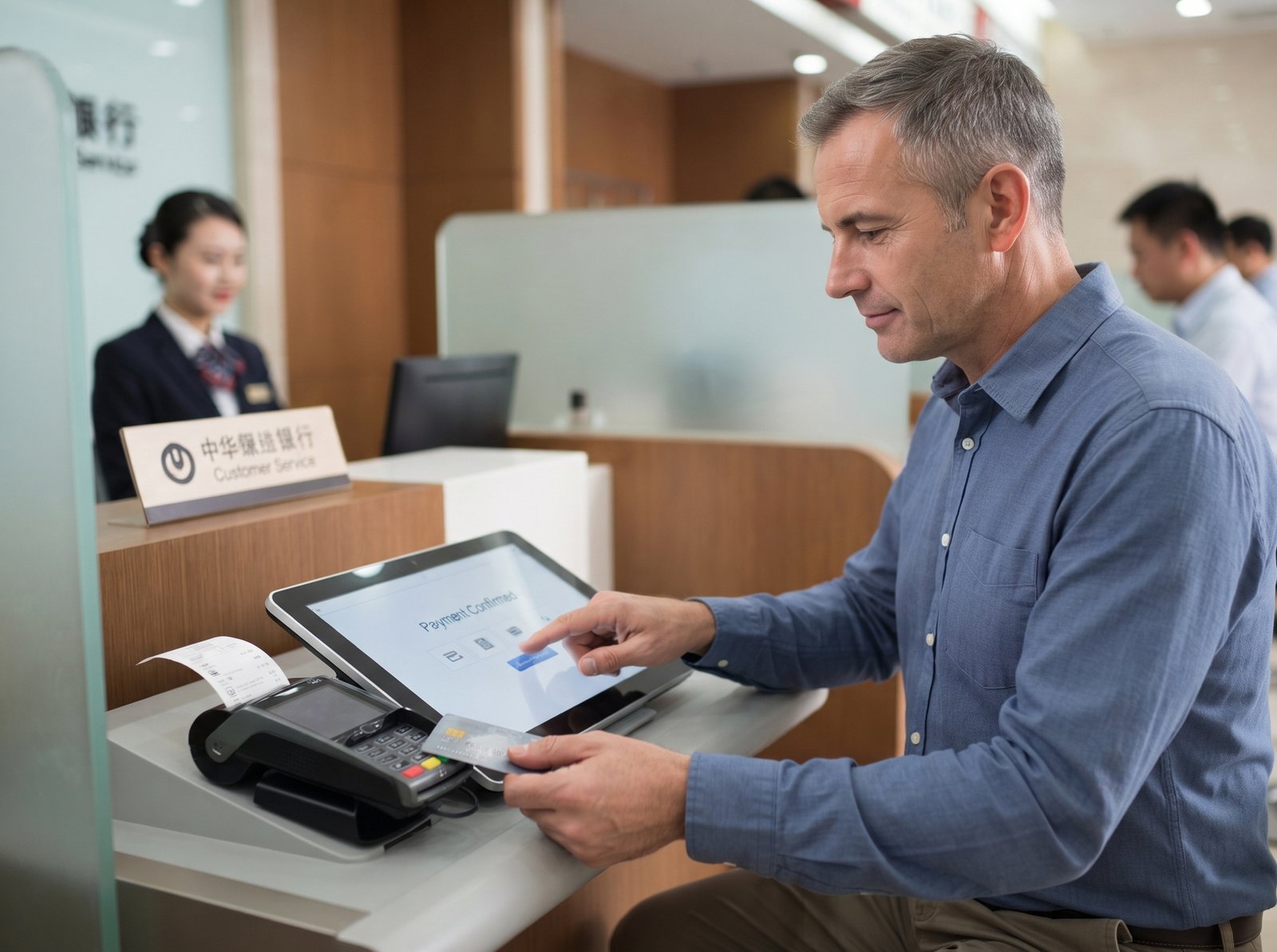
Credit card vs bank transfer —this choice determines whether you retain any leverage after a dispute arises. Credit card transactions include a chargeback mechanism that gives buyers roughly 120 days to challenge non-delivery or materially defective goods, during which issuers can freeze and forcibly reverse funds. Bank transfers via T/T are push transactions with no recall function; once cleared through the intermediary chain into the supplier’s account, recovery requires Chinese litigation or international collection, typically costing 30% to 50% of the disputed amount with limited success probability. For reference only, subject to official verification.
Suppliers prefer T/T not to save you money but to eliminate your recourse. The 2.5% to 3.5% card processing fee functions as compulsory insurance that buys access to the card network’s dispute infrastructure. When you wire funds instead, you self-insure against fraud and default with zero underwriting support.
Why Suppliers Push for Bank Transfer (And What They’re Not Telling You)
The Standard Supplier Script: “Wire Transfer Is Faster and Cheaper”
Walk into any negotiation with a Chinese furniture factory and you will hear some variation of the same pitch. The supplier claims credit card channels are unstable, that platform fees inflate your cost, or that large orders simply cannot be processed by card. These statements are designed to sound like logistical constraints when they are actually strategic preferences rooted in the supplier’s financial self-interest.
The “faster” argument is particularly misleading. A credit card authorization clears in seconds. The supplier receives confirmation of payment immediately, even if settlement takes one to three business days. The real speed advantage of T/T is not for the buyer; it is the speed with which the supplier can move the money out of reach.
The Real Reason: Eliminating Buyer Recourse
The core motivation is risk inversion. When you pay by T/T, the supplier receives cash immediately, holds it without escrow, and faces zero threat of a forced reversal. If the finished goods do not match the sample, if the shipment never leaves the port, or if the factory simply disappears, your money is already in their hands and the burden of recovery falls entirely on you.
This dynamic is especially acute in custom furniture, where production timelines stretch across six to twelve weeks. By the time you discover a problem, the supplier has spent your deposit on materials and labor. Without a chargeback threat, there is no financial incentive for them to prioritize your remediation over their next paying customer.
The Psychology of Urgency and Trust Building
Factories often pair the T/T request with time pressure. They claim raw material prices are rising this week, that production slots are filling, or that a competitor just placed a large order for the same stock. This manufactured urgency pushes buyers to skip due diligence on payment method risk.
The supplier frames the wire transfer as a gesture of trust, turning a financial vulnerability into a relationship ritual. They suggest that refusing the wire implies you do not trust them, introducing social pressure into a commercial decision. Experienced buyers recognize this manipulation and respond by insisting on protective payment terms or walking away.

How Credit Card Protection Actually Works for Furniture Buyers
The Chargeback Mechanism: Your 120-Day Safety Net
A chargeback is not a refund request to the merchant. It is a dispute filed directly with your card issuer, which temporarily debits the supplier’s account while the claim is reviewed. For furniture purchases from China, the typical dispute window opens from the transaction date and remains active for roughly 120 days, though some issuers extend this for undelivered goods.
The issuer assigns a reason code—non-delivery, merchandise not as described, or defective goods—and requests documentation from both parties. The supplier must respond with evidence that they fulfilled the order as agreed. If they fail to respond or their evidence is insufficient, the issuer reverses the charge and returns the funds to your account.
What Counts as Valid Evidence for a Furniture Dispute
Winning a chargeback requires evidence that the supplier breached the sales agreement. Screenshots of product listings, signed purchase orders specifying materials and dimensions, email chains acknowledging delivery timelines, and photos of received goods showing clear defects all strengthen your position. For non-delivery, tracking records showing no movement or a carrier confirmation of non-pickup are critical.
The quality of your documentation often determines the outcome. Vague complaints about “poor quality” rarely succeed. Specific measurements showing a dining table delivered at 140cm instead of the ordered 160cm, accompanied by the signed purchase order, create an objective standard that issuers can evaluate. Photograph all received goods before unpacking fully to establish the condition upon arrival.
The Limits: Custom Orders, Partial Payments, and Platform Intermediation
Chargebacks are not bulletproof. Custom-made furniture presents a gray area because the supplier can argue the buyer approved the design and materials, making “not as described” claims harder to prove. If you signed off on a production sample or technical drawing, the issuer may view the dispute as a subjective disagreement rather than a clear breach.
Partial payments complicate the math. If you paid a 30% deposit by card and the balance by wire, only the card portion is recoverable. The wired portion remains exposed. When paying through Alibaba or similar platforms, the platform acts as the merchant of record, adding a mediation layer that can delay the issuer’s direct intervention but may also provide additional documentation trails and contractual frameworks.
The Bank Transfer Reality: Why T/T Leaves You Exposed
The Irreversibility Problem
A T/T payment is a push transaction. You push the money out; the banking system does not pull it back on your behalf. There is no dispute button at your online banking portal. If the beneficiary account details are correct and the funds have settled, your bank’s responsibility ends.
The only paths forward are civil litigation in the supplier’s jurisdiction, which requires retaining Chinese legal counsel, or hiring an international collection agency. Both paths demand upfront investment with no guarantee of recovery. For disputes under $10,000, the cost of pursuit often exceeds the probable recovery, which is exactly why suppliers target this threshold.
The Intermediary Bank Black Hole: Fees and Delays
International wires rarely travel directly from your bank to the supplier’s bank. They pass through one or more intermediary banks, each of which may deduct fees without transparent disclosure. A $10,000 payment can arrive diminished by $50 to $150, creating a secondary dispute over whether the buyer or supplier absorbs the shortfall.
More importantly, these intermediaries have no liability for the underlying commercial transaction. They are pipes, not guarantors. The opacity of the correspondent banking network means you cannot trace exactly where your money paused or who touched it along the way. This matters when a supplier claims they never received the full amount and demands a supplementary payment.
The Account Verification Trap: Personal Accounts, Offshore Shells, and Third-Party Collectors
One of the most dangerous practices in China furniture trade is the request to wire funds to a personal account rather than a corporate account. This is common among small and mid-sized factories. It severs the legal link between the payment and the business entity named on your contract.
Offshore accounts in Hong Kong add another layer of jurisdictional complexity. A mainland factory asking you to wire to a Hong Kong entity may be engaging in regulatory arbitrage, tax optimization, or worse. Third-party collection accounts—where the supplier asks you to wire money to an unrelated company or individual—are red flags that often precede fraud. Always confirm that the beneficiary name matches the factory name on your contract and business license.

Head-to-Head: Credit Card vs. Bank Transfer in Real Dispute Scenarios
Scenario Mapping: Non-Delivery, Defective Goods, Wrong Specifications, Partial Shipment
The following table compares outcomes across common dispute triggers.
| Dispute Scenario | Credit Card Outcome | Bank Transfer Outcome |
|---|---|---|
| Complete non-delivery after payment | High recovery probability if filed within 120 days; issuer can reverse full amount | Near-zero direct recovery; legal action required with uncertain outcome |
| Defective goods (materials not as specified) | Moderate to high probability if photos and specs document the variance | Recovery depends on supplier goodwill or litigation; no automatic process |
| Wrong specifications (size, color, design) | Strong case if purchase order details differ from delivered goods | Weak position; supplier may claim buyer approved production samples |
| Partial shipment (missing items) | Proportional recovery possible for missing portion | Difficult to enforce partial refund; supplier may delay indefinitely |
| Supplier disappears after deposit | Chargeback can recover card-paid deposit if filed promptly | Deposit is typically unrecoverable without criminal proceedings |
Recovery Rates and Cost Comparison
Credit card chargebacks for cross-border consumer goods achieve recovery rates ranging from 60% to 85% when the buyer submits adequate documentation within the dispute window. For reference only, subject to official verification. The cost to the buyer is usually limited to the time spent compiling evidence. Some issuers charge a nominal dispute fee, typically $25 to $50, which is refunded if the dispute is resolved in the buyer’s favor.
T/T recovery through international debt collection firms succeeds in roughly 15% to 30% of cases involving mainland Chinese individual or small-business suppliers, with fees consuming 30% to 50% of any recovered amount and timelines stretching beyond twelve months. For reference only, subject to official verification. Litigation in China is more expensive upfront and rarely pursued for disputes under $20,000. The math is brutal: a $5,000 T/T loss is almost certainly a permanent loss.
The Supplier Tactics That Strip Away Your Protection
The “Credit Card Surcharge” Trick
Some suppliers quote a lower price for T/T and inflate the credit card price by 4% to 6%, claiming the difference covers processing fees. This is often a bluff. Actual card processing costs for the merchant typically run 2.5% to 3.5%. The inflated surcharge is designed to make the wire option look economically rational while masking the protection you are surrendering.
Calculate the true cost. On a $5,000 order, a 3% card fee equals $150. That $150 purchases dispute rights, issuer investigation, and potential full recovery. A $5,000 T/T loss costs you the entire $5,000 plus any recovery pursuit expenses. The surcharge is cheap insurance disguised as a penalty.
The “Split Payment” Trap: Credit Card for Sample, Wire for Bulk
A common escalation tactic is to accept credit card for a small sample order, build confidence, then insist on T/T for the main production run. The sample phase proves nothing about bulk order integrity. By the time you wire the bulk payment, the supplier has already demonstrated they can deliver a single item while locking you into an irreversible payment for twenty items.
The psychology is deliberate. The smooth sample transaction builds trust. The buyer lowers their guard. The bulk order demand arrives with plausible-sounding excuses about card limits or platform restrictions. Break the pattern. If a supplier accepted card for the sample, demand card or escrow for the bulk, or reduce the bulk order to card-friendly size.
The Fake Proforma Invoice with Altered Payment Details
Sophisticated scammers intercept email communications and send revised proforma invoices with different beneficiary account details. The factory name looks identical except for one character, or the account is at a different bank entirely. Buyers who wire against these altered documents send money directly to fraudsters.
Always verify account details through a secondary channel before initiating any T/T. Call the factory on a number you obtained independently, not one from the email thread. Confirm the account name, bank, and SWIFT code verbally. Cross-check the beneficiary name against the business license. One verification phone call takes ten minutes; recovering from a wire fraud takes years.
The “Platform Fees Are Too High” Excuse for Off-Platform Wire
When a supplier pushes you to complete payment outside Alibaba, Made-in-China, or another platform, they are not saving you money. They are removing the platform’s transaction record and any escrow or mediation protections. Off-platform wires leave you with no neutral third party to testify to the terms of the deal.
Platform fees exist because platforms provide infrastructure: dispute mediation, transaction history, supplier verification, and escrow services. A supplier who asks you to abandon this infrastructure is asking you to trade verified accountability for a marginal price reduction that may never materialize.
A Payment Strategy for Different Buyer Profiles
For Personal Buyers: When to Use Credit Card, When to Walk Away
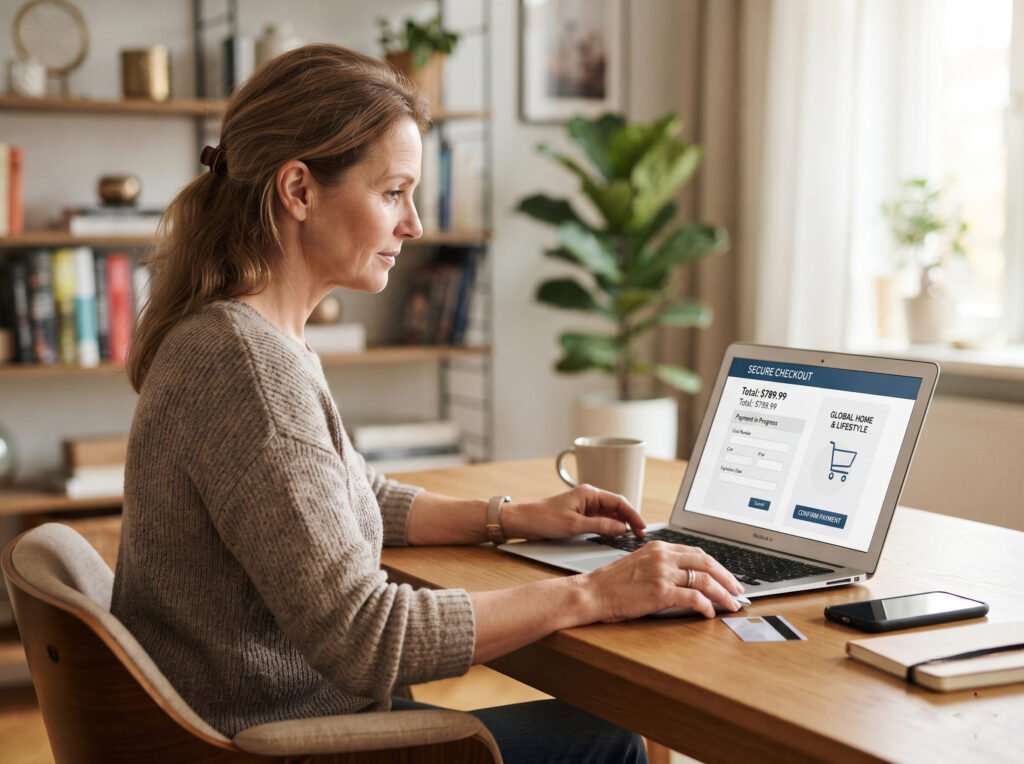
Personal buyers purchasing one to five pieces for home use should default to credit card payment through a secure gateway. If the supplier refuses card payment entirely, treat that as a signal of elevated risk rather than a negotiation point. For orders under $5,000, the protection premium embedded in card processing is trivial compared to the cost of a total loss.
Walk away from any supplier who will not accept cards or platform-escrowed payments for small orders. The China furniture market has thousands of factories. A seller who insists on T/T for a $2,000 sofa order is telling you something important about their financial stability or their intentions.
For Micro-B2B Buyers: The Hybrid Payment Protocol
Buyers sourcing three to twenty pieces for commercial use—such as short-term rental operators or independent designers—should adopt a hybrid structure. Pay the deposit by credit card or through a platform escrow service. Release the balance only after third-party inspection confirms materials, dimensions, and finish match the purchase order.
If the supplier demands full T/T upfront, negotiate for a letter of credit or reduce the order size to fit within your card limits. Do not let order growth outpace your protection growth. The moment your exposure exceeds your recovery mechanisms, you are gambling.
For Large B2B Orders: Escrow, Letters of Credit, and Staged Wires with QC Gates
Full-container buyers moving $30,000 to $150,000 in furniture cannot rely on consumer card protections because individual card limits rarely cover these amounts. The following table outlines recommended structures.
| Buyer Profile | Order Size | Recommended Payment Structure | Risk Mitigation Tool |
|---|---|---|---|
| Personal consumer | $500–$5,000 | Credit card via secure gateway | Chargeback rights |
| Micro-B2B | $5,000–$30,000 | Card or escrow for deposit; balance after QC | Third-party inspection; platform escrow |
| Large B2B | $30,000–$150,000 | Staged T/T with LC or documentary collection | Letter of credit; pre-shipment inspection; factory audit |
| Enterprise | $150,000+ | Irrevocable LC with strict documents | Bank guarantee; on-site QC; legal review of sales contract |
For large orders, never wire the full amount without staged quality control gates. A 30% deposit with T/T, 40% after pre-shipment inspection, and 30% against bill of lading is a standard structure that keeps the supplier accountable through production. Letters of credit shift the risk to banks rather than personal trust, though they add cost and documentary complexity. The LC fee, typically 0.5% to 2% of the order value, is again insurance against default.

FAQ: Payment Protection for China Furniture Purchases
Can I do a chargeback if my Chinese furniture never arrives?
Yes. Non-delivery is one of the strongest grounds for a chargeback. File the dispute with your card issuer as soon as the delivery window passes and the supplier cannot provide valid tracking or a bill of lading. Submit all correspondence, the purchase order, and proof that the goods never reached the carrier.
Is it safe to pay a 30% deposit by wire transfer to a Chinese factory?
It is common but not safe in the protective sense. A 30% T/T deposit exposes you to forfeiture if the factory delays indefinitely, delivers substandard goods, or closes shop. If you must use T/T for a deposit, pair it with a factory audit, a legally enforceable sales contract under Chinese law, and a pre-shipment inspection clause that must be satisfied before the 70% balance is released.
What should I do if my supplier insists on bank transfer only?
Treat this as a red flag, not a requirement. Ask why they cannot accept platform escrow or credit card. If the reason is unconvincing, seek alternative suppliers. The furniture manufacturing base in China is deep and competitive. A supplier who refuses all buyer-protective payment methods is often one who has already planned for the possibility that you will need protection.
Does paying by credit card through Alibaba offer better protection than direct card payment?
It offers different protection. Alibaba Trade Assurance creates a contractual framework between you, the supplier, and the platform. The platform mediates disputes and can enforce refunds from the supplier’s assurance deposit. However, the process is slower than a direct card chargeback and requires adherence to Alibaba’s evidentiary rules.
Direct card payment gives you faster issuer intervention but lacks the platform’s contractual enforcement layer. Neither is perfect; both are superior to T/T alone. Your choice depends on whether you prioritize speed of recovery or depth of contractual protection.
How long do I have to dispute a credit card charge for furniture from China?
Most issuers allow disputes within 120 days of the transaction date or the expected delivery date, whichever is later. Some extend this for undelivered goods. Do not wait. The sooner you file, the fresher the evidence and the greater the likelihood that the supplier has not yet withdrawn the funds from their merchant account.
Recommended Resource
Interi Furniture specializes in custom furniture manufacturing for residential, hospitality, and commercial projects. Their experience in materials, craftsmanship, and project realization makes them a valuable resource for designers and buyers seeking tailored furniture solutions from China.