








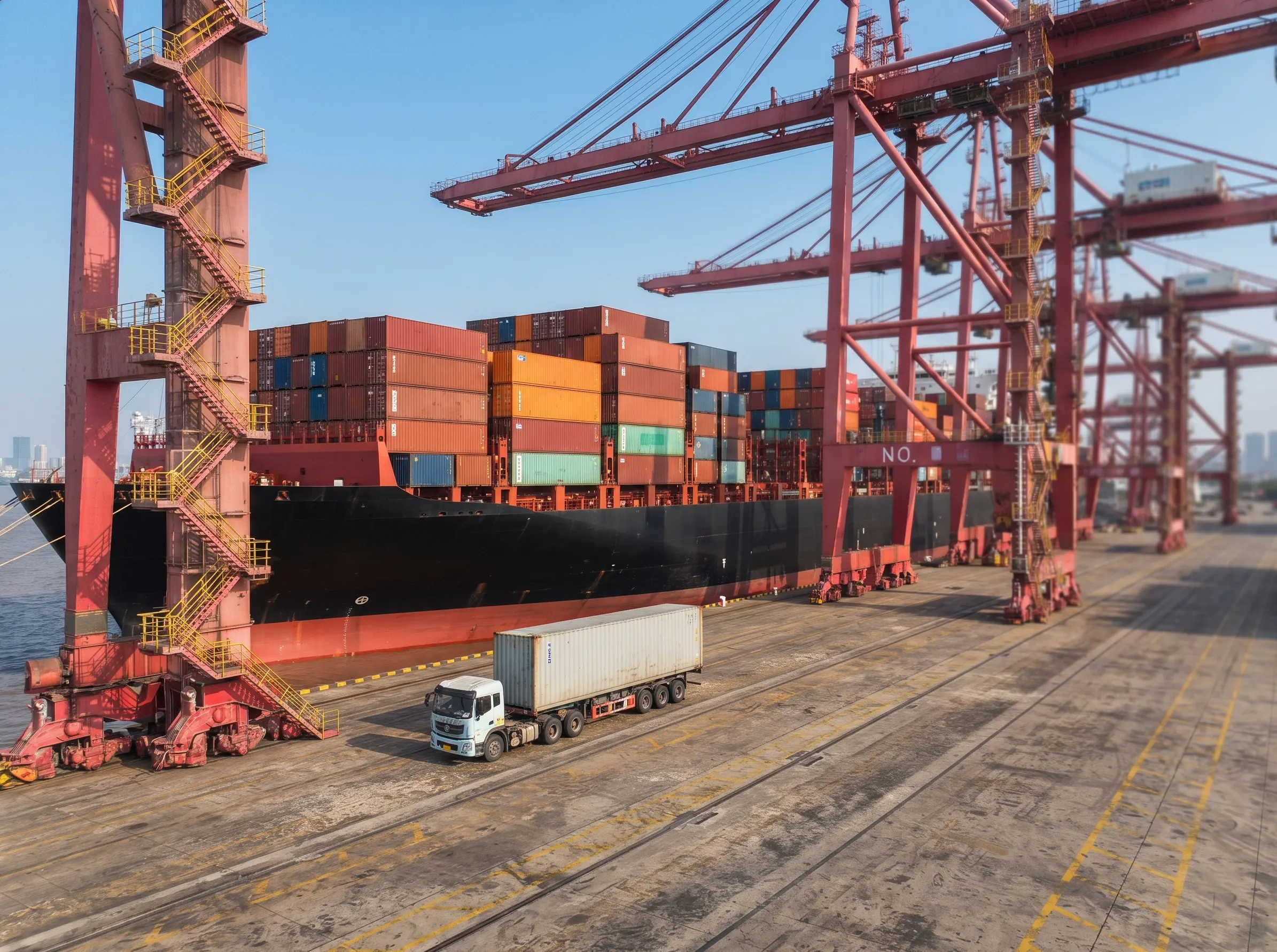
One in three. That is the number bouncing around WeChat groups and freight-forwarder LinkedIn posts. We heard it from a Ningbo agent in March, from a Yantian warehouse supervisor in June, and from four buyers who used it to justify panic-booking Q2 slots. Nobody can show us the customs sheet. No Chinese port authority publishes outbound TEU splits by HS code. The one-in-three figure is warehouse folklore, not government data. What we can prove is that furniture is the largest containerized import category at the Port of Los Angeles, that it pays less per cubic meter than electronics, and that carriers treat it accordingly when vessels fill up.
China shipped $36.44 billion in furniture exports during 2024, roughly 30.8% of global furniture trade by value. Statista and the Observatory of Economic Complexity both track that number. Value share and box share are not the same thing. A 40-foot high-cube of iPhones is worth $300,000. The same box of flat-pack dining chairs might clear $25,000. Both count as one TEU. That is the entire story in one sentence, and most headlines miss it.
What Buyers Are Actually Dealing With
Your forwarder calls on a Tuesday. “Furniture is eating space again,” he says. You got a $3,200 quote for Shenzhen–Los Angeles last week. This week it is $4,100. Same lane, same carrier, same commodity. The forwarder blames “volume limits.” Your container is light sofas. The vessel is not overweight. It is over-cubed, and your cargo is the easiest thing to roll.
This is not a quarterly report. This is a Tuesday. If you move five to fifty containers a year, you live in this gap between the story and the reality.
E-commerce sellers feel it differently. Their LCL consolidation sits in a Guangzhou warehouse because one seller in the mix filed the wrong HS code. The whole box misses the sailing. Amazon restock date slips ten days. No forwarder takes responsibility. The warehouse blames customs. Customs blames the shipper. The shipper is a dropshipper in Dongguan who stopped answering WeChat three days ago.
The One-in-Three Myth, Unpacked
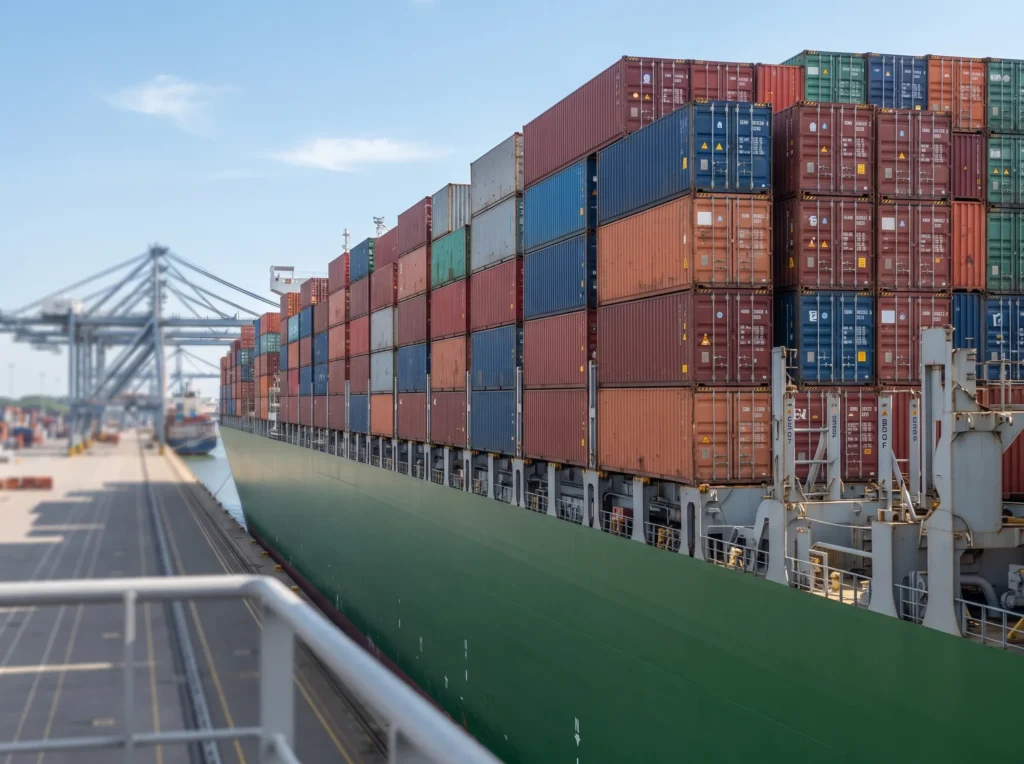
We have asked. At Yantian, at Ningbo-Zhoushan, at Qingdao. Where does the 33% furniture share come from? The answers are always the same: “booking experience,” “what the warehouse sees,” “the customs broker’s estimate.” Useful color. Not a data set. Chinese ports publish total TEU throughput. They do not break down outbound containers by product category at the granularity an independent analyst would need to confirm that headline.
What we do have is hard inbound data from the Port of Los Angeles. In calendar year 2025, furniture topped the import leaderboard at 680,016 TEU. Auto parts came second at 361,467 TEU. Furniture at POLA represented 12.8% of total loaded imports, calculated from the port’s published total of 5,316,713 TEU. Twelve point eight percent at the US end of the lane. Not thirty-three. The gap is real, and it matters.
Where does the 33% come from, then? Our best guess: it is a forwarder booking-window average, not a national port average. If you are a consolidation warehouse in Foshan and 60% of your weekly outbound boxes are furniture-related, it is easy to believe the whole country looks like your loading dock. It does not. But your loading dock is what your forwarder quotes from. That is how estimates become headlines.
The category itself is a garbage can. “Furniture” in customs filings swallows table legs, mirror frames, hardware kits, outdoor loungers, and sometimes lighting assemblies. A container of unassembled bed frames and a container of finished dining sets both file under the same broad heading. Their landed cost, handling needs, and destination tariffs have nothing in common. The port counts them as one thing. The buyer should not.
Then there is the Southeast Asia split. Vietnam and Malaysia now make a lot of upholstered goods. But hard goods, case goods, metal furniture, and anything that requires precision CNC cutting still comes overwhelmingly from China. When a US buyer splits an order, the Vietnamese sofa ships from Haiphong, the Chinese dining table ships from Shekou. Only the Chinese box gets folded into the “one in three” narrative. The headline ignores the split.
Port Data: What We Know and What We Do Not
| Data Point | Hard Number | Where It Comes From | Why It Is Limited |
|---|---|---|---|
| POLA furniture imports, CY 2025 | 680,016 TEU | Port of Los Angeles official statistics | Inbound only. Says nothing about Chinese outbound share. |
| Furniture share of POLA loaded imports | 12.8% | Our calculation from POLA total loaded imports of 5,316,713 TEU | One US gateway. Not China. Not global. |
| China furniture exports, 2024 | $36.44 billion | Statista / OEC trade data | Value, not volume. A dollar is not a cubic meter. |
| China global furniture export share | 30.8% | Statista / OEC trade data | Market share by value. Same limitation. |
| EU imports from China: furniture, lighting, bedding | €21.3 billion (2025) | Eurostat | Aggregated category. Bedding is not a bookshelf. |
| SCFI composite, Aug 14 2026 | 3,355.24 | Shanghai Shipping Exchange | Shanghai spot rates only. Not contract rates. Not every lane. |
The POLA number is the only one on this list that is both granular and official. Furniture has held the top import slot there for years. The 2025 figure is up 0.5% from 2024’s 676,431 TEU. That is not a boom. That is gravity. Furniture is heavy, bulky, and it keeps coming. The story is not explosive growth. It is stubborn persistence in a market where space is getting expensive.
Why Carriers Do Not Love Your Sofa Container
| Category | Typical Value per 40ft HC | Cubic Meter Utilization | Weight per Container | Carrier Priority |
|---|---|---|---|---|
| Electronics | $150,000–$400,000 | 95–98% | 18–22 MT | High. Dense, stackable, predictable. |
| Apparel | $80,000–$200,000 | 85–92% | 12–16 MT | Medium. Soft, but uniform. |
| Automotive parts | $60,000–$150,000 | 90–95% | 22–26 MT | High. Heavy, regular shapes, steady volume. |
| Furniture (mixed SKUs) | $25,000–$70,000 | 60–78% | 8–14 MT | Low. Light, bulky, irregular, hard to stow below deck. |
| Furniture (single SKU bulk) | $40,000–$90,000 | 80–88% | 10–16 MT | Medium. Better, but still not great. |
For reference only, subject to official verification. These ranges come from factory loading observations and forwarder feedback, not carrier-published data.
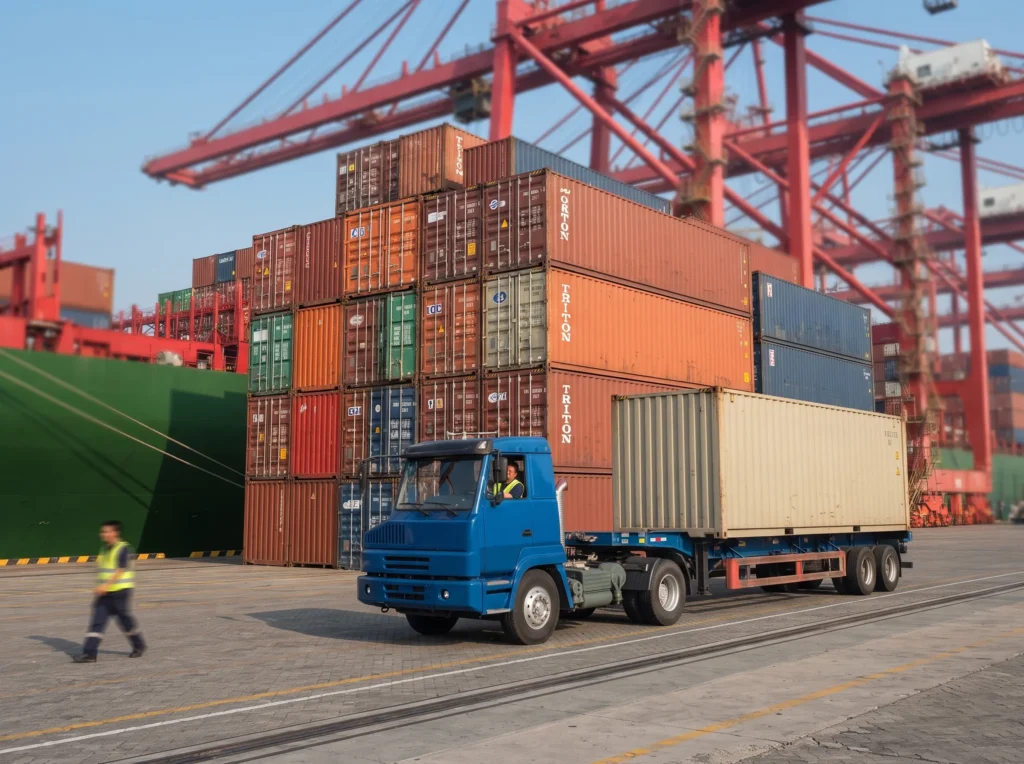
Here is what that table means in practice. A 40-foot high-cube has roughly 76 cubic meters of usable space. A well-stowed electronics load fills 72 of them. A typical mixed-SKU furniture load fills 50, maybe 55, and the rest is air, corner protectors, and plywood bracing. The carrier charges the same rate for both boxes. But when the vessel runs out of cubic meters before it runs out of weight capacity, the light bulky box is the first one the operations team cuts. It is not personal. It is math. Your sofa pays less per cubic meter than a server rack. When space is tight, the server rack stays. Your sofa rolls to next week.
B2B Bulk vs. E-Commerce: Two Completely Different Games
| Dimension | Traditional B2B Buyer | Cross-Border E-Commerce Seller |
|---|---|---|
| Order size | 1–5 x 40ft containers per SKU | 2–10 CBM per shipment, mixed SKUs |
| Factory link | Direct, long-term, one or two sources | Multiple factories, spot orders, platform-driven |
| Booking rhythm | Monthly or quarterly contract slots | Weekly or bi-weekly LCL consolidation |
| Packaging | Factory export cartons, stackable pallets | Individual retail boxes, often non-standard sizes |
| Customs | Single HS code, bulk declaration | Multiple HS codes, mixed declarations, higher inspection risk |
| Forwarder’s real job | Execute the contract, negotiate amendments | Consolidate, warehouse-manage, chase paperwork |
| Daily pain | Rate spikes, rolled bookings | Warehouse delays, missing documents, missed sailings |
The e-commerce explosion is the quiet driver of the chaos. One B2B buyer shipping 200 containers a year is a clean account. Two hundred e-commerce sellers shipping one container each create the same TEU count but a completely different operational profile. More warehouse touches. More customs declarations. More chances for one missing commercial invoice to hold up an entire consolidation. Warehouse managers in Guangzhou and Shenzhen will tell you, off the record, that furniture LCL is now their most labor-intensive vertical. Not their most profitable. Just the most annoying.
2026 Freight Rates: What We Are Seeing
| Quarter | Rate Trend (Asia–US West Coast) | Capacity Outlook | Furniture-Specific Pressure |
|---|---|---|---|
| Q1 2026 | Post-CNY dip, then sharp rebound | Tight after factory restarts | Moderate. Backlog clearance. |
| Q2 2026 | Big jumps. $1,000+ per container in some weeks. | Very tight. Early peak season pull-forward. | High. E-commerce sellers stuffing warehouses ahead of Prime Day. |
| Q3 2026 | Peak season surcharges active. Rates sticky. | Tightest window. Blank sailings likely. | Extreme. Furniture gets rolled first. |
| Q4 2026 | Possible softening, but floor is high. | Stabilizes as holiday inventory lands. | Moderate. Buyers shift to 2027 contract talks. |
For reference only, subject to official verification. Based on SCFI tracking, carrier GRI announcements, and what forwarders are actually quoting. SCFI composite was 3,355.24 on August 14, 2026, up 79.1 points week-over-week.
The SCFI crossing 3,300 is not an abstract number. It is a signal that spot rates are running hot, and carriers are layering GRIs and PSS on top with weekly regularity. Maersk, CMA CGM, and Ocean Alliance members have announced peak-season surcharges of $1,000 to $2,000 per 40-foot box on select lanes. For a furniture shipper, that is not a line item. That is a margin event. If your landed cost is $18,000 and freight was $3,200, a $1,500 surcharge just ate 8% of your margin. For electronics, the same surcharge is a rounding error.
Three Red Flags Your Forwarder Is Selling You a Story
“Furniture embargo.” We have heard it a dozen times. Ask for the sailing number. Ask for the carrier bulletin. Real embargoes are published. They have dates, vessel names, and official notice numbers. If your forwarder cannot produce one, you are being pushed from a contract rate to a spot rate. The furniture category is a convenient excuse. Do not accept it without paper.
Demurrage and detention at destination is the second silent killer. Electronics clear in 48 hours. A container of fully assembled sectionals can sit for five to seven days waiting for a warehouse slot, a lift gate, and a crew that knows how to handle upholstered goods without tearing the fabric. Every day past free time is $75 to $150. On a seven-day delay, that is $525 to $1,050 per container, and it is not negotiable with the port. It is negotiable with your forwarder before you book, if you know to ask.
LCL rollover is the third. When a consolidation box is overweight or overbooked, the warehouse pulls the lightest cargo first. Furniture is almost always the lightest thing in the mix. Your two-CBM coffee table shipment is the first to get yanked. You find out after the sailing. Your forwarder blames the carrier. The carrier blames the warehouse. Nobody refunds your lost sales.
What to Do, by Buyer Type
B2B bulk buyers moving furniture container shipping volume should lock Q3–Q4 contract rates in Q2, not in Q3 when you are desperate. Split across two carriers minimum. If one rolls you, the other holds. Write “no substitution” on every booking. Otherwise your forwarder swaps your confirmed slot for a cheaper sailing and charges you a “rescheduling fee.” Load to the door. Empty space in a furniture container is wasted money. We have seen buyers leave 15 cubic meters unused because the factory packed poorly. That is 15 cubic meters of freight you paid for and got nothing.
E-commerce sellers: find a consolidation partner in Guangzhou or Shenzhen who holds inventory for 20 to 30 days and builds dense mixed-SKU boxes. Do not let your factory book the freight. Factory-booked freight is almost always the most expensive option because the factory is marking up a forwarder they have a relationship with, not the forwarder who is best for your lane. Get your HS codes right before the cargo moves. One wrong code in a mixed LCL box can hold the entire container at destination customs. We have seen it happen. The delay is not days. It is weeks.
Small buyers and interior designers: FCL below 15 CBM is usually a bad deal. LCL below 3 CBM is often more expensive per unit than buying locally once you add freight, duty, and the damage claim you will almost certainly file. If you must ship, use a furniture specialist forwarder, not a generalist. The difference between a forwarder who knows how to brace a marble-top console and one who treats it like a shoe box is the difference between intact and destroyed. We have walked enough receiving docks to know which is more common.

Frequently Asked Questions
Why does my furniture keep getting rolled?
Because it is light and awkward. Carriers prioritize dense, high-value cargo when vessels hit volume limits. Your sofa is not being punished. It is just the least profitable TEU to keep on a full boat. Book earlier. Avoid peak-season sailings. It helps. It does not fix the math.
Is the one-in-three number real?
Not in any official sense. What is real is 680,016 TEU of furniture imports at the Port of Los Angeles in 2025, which is 12.8% of that port’s loaded imports. The 33% figure is forwarder booking-window folklore. It might be directionally true for certain consolidation warehouses in Foshan. It is not a national customs statistic. Also, “furniture” in port data includes hardware, lighting, and outdoor goods. The category is wider than most buyers think.
FCL or LCL for my furniture order?
Above 15–18 CBM, FCL is almost always the right call for cost and damage control. Below 10 CBM, LCL works on paper but introduces handling risk most buyers underestimate. The 10–15 CBM zone is a judgment call. For reference only, subject to official verification: our field observation is that the crossover point for standard case goods sits around 12–14 CBM.
Are there hidden furniture surcharges?
Carriers do not publish commodity-specific rate sheets. But during peak periods, some apply informal fees for “overlength” or “non-standard stowage” on furniture that needs special below-deck placement. These are not standard surcharges. They are operational adjustments dressed up as line items. Always ask for an all-in breakdown. If you see a charge that does not map to GRI, PSS, BAF, or terminal handling, question it.
How early should I book?
Contract holders: 21–28 days before sailing. Spot buyers: 14–21 days. E-commerce LCL: 30–45 days from cargo-ready date. These are roughly 40% longer than 2023 norms. Buyers negotiating furniture container shipping contracts for 2027 should start talking to carriers in Q4 2026. The allocation windows are getting tighter, not looser.
Recommended Resource
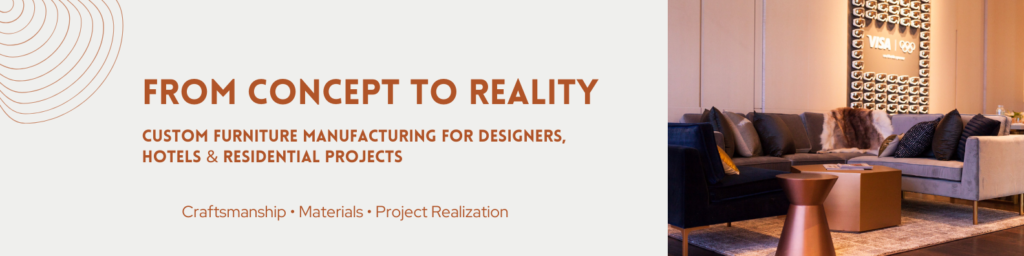
Interi Furniture specializes in custom furniture manufacturing for residential, hospitality, and commercial projects. Their experience in materials, craftsmanship, and project realization makes them a valuable resource for designers and buyers seeking tailored furniture solutions from China.