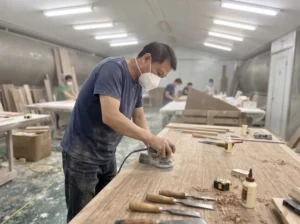


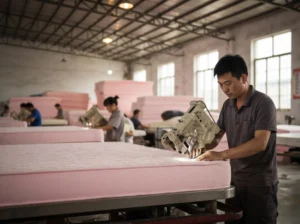





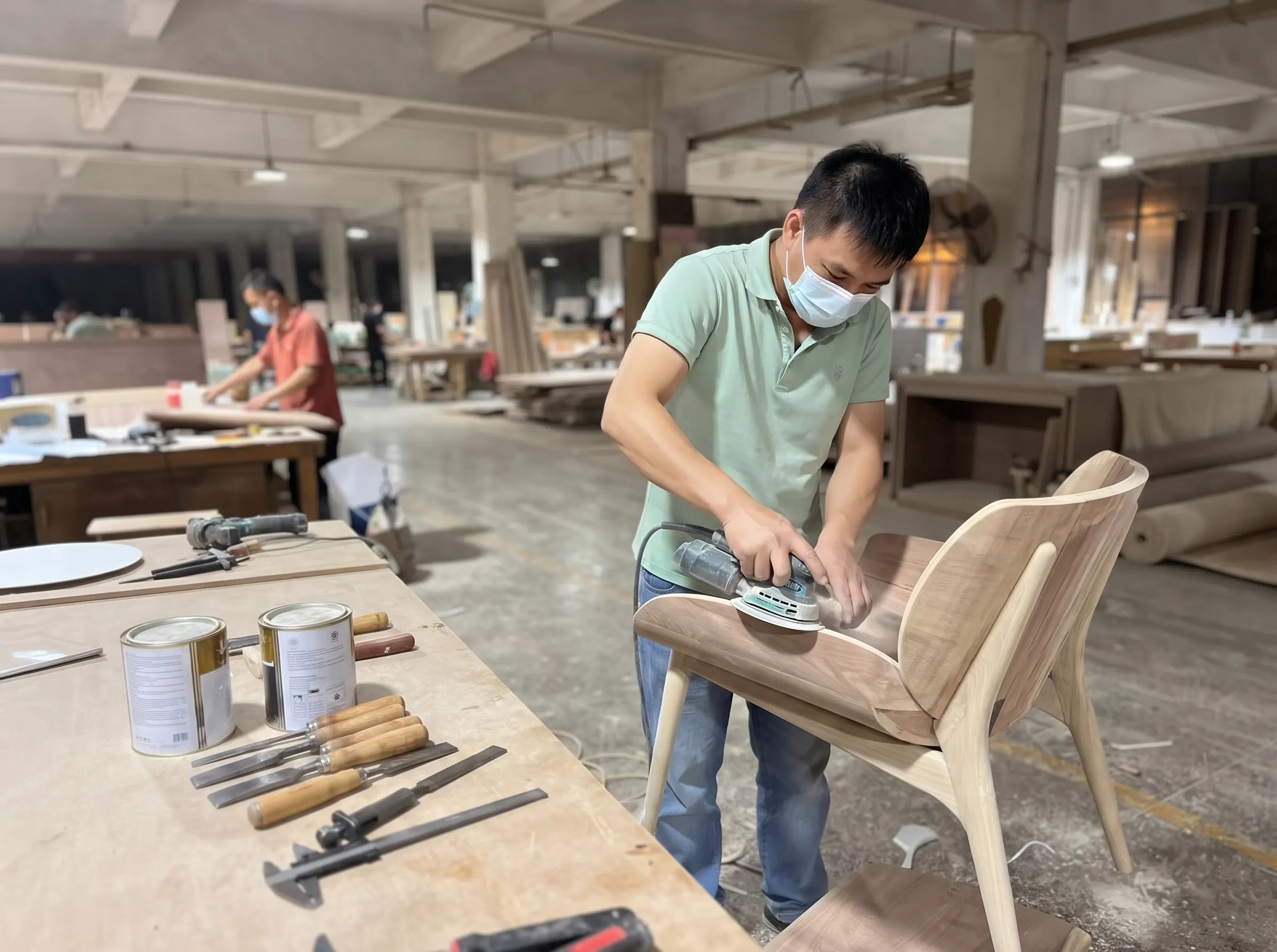
Most buyers assume a one-year factory warranty on China-made furniture means protection against normal use issues. It does not. In practice, the warranty covers only manufacturing defects present at the time of shipment, not deterioration caused by daily use. We have spent over a decade walking factory floors in Foshan and Dongguan, and the reality is stark: wear and tear warranty China factories offer routinely excludes the very problems buyers expect it to solve. Understanding why requires looking past the English-language contract page and into the commercial logic that governs warranty culture in Chinese furniture manufacturing.
The Six-Month Reckoning
Your container arrives. The sofas look great. Six months later, the fabric pills. The seat cushions soften. The dining chair joints wobble slightly. You email the factory. The reply comes fast: “This is normal wear and tear. Not covered.” You feel deceived. Your own customers are complaining. You are stuck in the middle. This is the exact moment where the gap between buyer expectation and factory reality becomes expensive and painful. We have seen this script play out hundreds of times across every major furniture category.
What “Warranty” Actually Means on a Chinese Factory Floor
Here is the first hard truth. When a Chinese furniture manufacturer lists a “one-year warranty,” they are not promising that the product will look and perform like new for twelve months of use. They are warranting that the item was free from material and workmanship defects at the moment it left the factory. That is a massive difference. In Western commercial culture, a warranty often implies a performance guarantee over time. In the Chinese manufacturing context, it functions as a post-shipment defect liability window. The linguistic overlap creates a trap.
Manufacturing Defect vs. Wear and Tear
A manufacturing defect is a flaw that existed at the point of production. Examples include a cracked frame hidden inside the upholstery, incorrect foam density specification, or improperly cured wood glue. Wear and tear is the gradual deterioration that results from ordinary use. Examples include fabric pilling from body friction, cushion compression from repeated sitting, or minor surface scratches on a dining table. Factories classify these into entirely separate categories. Defects trigger warranty obligations. Wear and tear triggers automatic denial.
| Factory Warranty Reality | Buyer Common Assumption |
|---|---|
| Defects existing at shipment only | Protection against any issue within 12 months |
| Structural failure from material flaws | Surface wear from normal daily use |
| Factory workmanship errors | Comfort degradation over time |
| Replacement of clearly defective parts | Full product replacement or refund for any complaint |
The Cultural and Contractual Gap
The disconnect runs deeper than language. It is rooted in how Chinese manufacturing culture conceptualizes product life cycles. In many factories we have visited, the warranty is treated as a quality-control checkpoint extended beyond the loading dock, not a customer-service promise. The factory’s obligation ends when the defect should have been caught. Once the product is in use, deterioration is considered the buyer’s operational responsibility.
This logic clashes directly with Western buyer expectations. An American retailer expects that a one-year warranty on a sofa means the cushions will not flatten prematurely. A Chinese factory manager sees cushion flattening as inevitable physics. The same words on paper mean different things to different commercial cultures.
The translation trap makes this worse. We have reviewed contracts where the English version states “one-year comprehensive warranty” while the Chinese version specifies “one-year warranty against manufacturing defects only.” The discrepancy is not accidental. It is a risk allocation strategy. When disputes arise, factories default to the Chinese text as the governing version. Buyers who cannot read the original text are negotiating blind.
Soft Goods vs. Hard Goods: Where the Line Gets Drawn
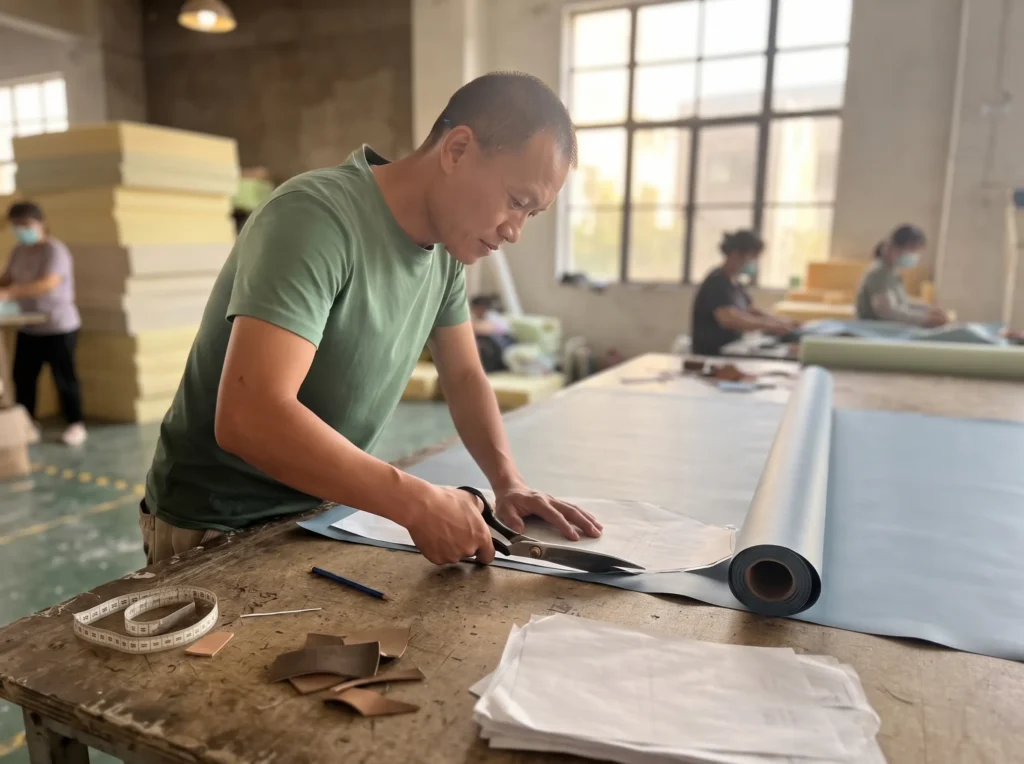
Not all furniture categories face the same wear and tear denial patterns. Factories apply different internal standards based on material behavior and repair economics.
| Category | Common Wear and Tear Issues | Factory Typical Response | Claim Success Likelihood |
|---|---|---|---|
| Upholstered sofas and armchairs | Fabric pilling, cushion sagging, seam stretching | Automatic denial as normal use | Very low (For reference only, subject to official verification) |
| Mattresses | Body impression formation, edge collapse | Blamed on user weight or bed frame | Very low |
| Dining chairs (upholstered) | Seat pad compression, fabric soiling | Categorized as maintenance issue | Very low |
| Solid wood tables and chairs | Surface scratches, minor joint loosening | Attributed to humidity or use intensity | Low |
| Metal frames and hardware | Coating wear, bolt loosening | Blamed on assembly or over-tightening | Low |
| MDF and particle board | Edge swelling, veneer lifting | Sometimes accepted if water damage is absent | Moderate |
The pattern is clear. Soft goods claims fail more often because the evidence of wear is visible, gradual, and easily attributed to user behavior. Hard goods claims have slightly better odds when the issue is clearly structural, but surface-level complaints still face steep resistance.
Inside the Factory Claim Room
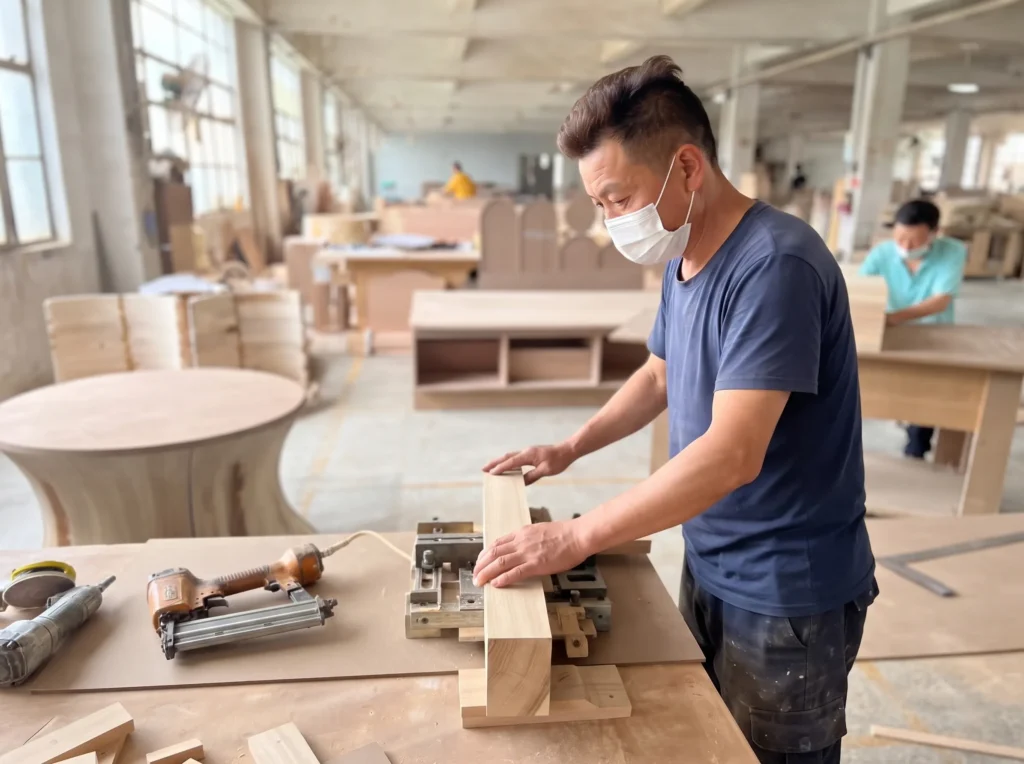
We have sat in warranty negotiation rooms in Shunde and Houjie. The process is more predictable than buyers realize. When a wear and tear claim arrives, the factory’s default posture is rejection. The sales team forwards the complaint to production. Production reviews photos and declares the issue “within normal range.” Management rarely overrides production’s assessment because accepting the claim sets a precedent that could open the floodgates.
| Scenario | Factory Internal Classification | Typical Response | Precedent Risk to Factory |
|---|---|---|---|
| Frame crack within 30 days of delivery | Manufacturing defect | Repair or replacement offered | Low |
| Fabric pilling after 4 months of residential use | Normal wear and tear | Denied with usage explanation | Zero |
| Cushion height loss exceeding 20% in 6 months | Borderline; depends on photo evidence | Partial repair or “comfort kit” offered | Medium |
| Hardware loosening on dining set after 8 months | Assembly or use-related | Denied; buyer advised to tighten locally | Zero |
| Veneer bubbling on hotel project within 90 days | Likely manufacturing defect | Full replacement or repair dispatched | Low |
For reference only, subject to official verification: In our industry observation, the success rate for pure wear and tear claims against Chinese furniture factories is below 10%. The rate improves only when the buyer has pre-shipment inspection documentation proving the defect existed at origin, or when the buyer represents a significant ongoing volume that the factory cannot afford to lose.
Contract Language That Sets You Up for Failure
The warranty clause in your purchase order is where the battle is won or lost. Most buyers sign standard factory templates without reading the exclusion language. That is a mistake that costs thousands later.
| Red Flag Language | Why It Is Dangerous | What to Demand Instead |
|---|---|---|
| “Warranty covers manufacturing defects only” | Explicitly excludes wear and tear without defining it | “Warranty covers defects in materials and workmanship; wear and tear exclusions must be itemized with specific thresholds” |
| “Normal use is not covered” | Vague; factory defines “normal” retroactively | “Wear and tear is defined as deterioration exceeding X% within Y months under Z use conditions” |
| “Chinese version governs in case of dispute” | Allows hidden meaning in untranslated text | “English version governs; both languages must be certified as equivalent” |
| “Buyer bears all shipping costs for warranty claims” | Makes small claims economically unviable | “Factory bears return shipping for verified defects; local repair costs capped at $X for wear disputes” |
| “Warranty void if product not used in climate-controlled environment” | Impossible standard for most commercial applications | “Environmental exclusions limited to direct water damage or outdoor use unless specified” |
The Evidence Problem
Here is the practical reality that crushes most claims. To prove a manufacturing defect, you need to show the flaw existed at shipment. To prove wear and tear is excessive, you need baseline measurements, controlled usage records, and expert testimony. None of this is practical for a retailer managing hundreds of SKUs. Factories know this. They understand that the cost of pursuing a $2,000 claim across borders exceeds the value of the claim itself. The economic asymmetry is the ultimate shield.
Buyers who want any leverage must document everything before the container seals. Pre-shipment photos with timestamps. Foam density test reports. Fabric abrasion certificates. Joint stress documentation. Without this baseline, a factory can claim any post-delivery issue is use-related, and you have no counter-evidence.
What Different Buyers Should Do Before the Container Ships
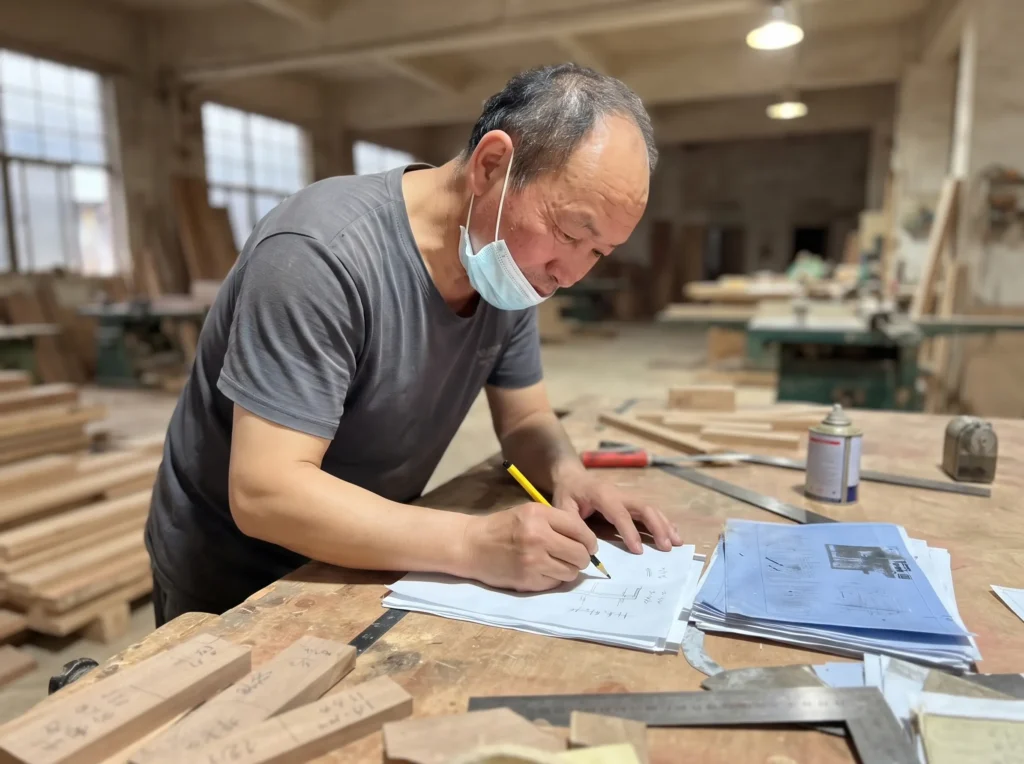
There is no one-size-fits-all fix. Your strategy depends on where you sit in the supply chain.
For B2B Importers and Wholesalers
Negotiate warranty terms as a commercial term, not an afterthought. Demand itemized exclusion lists with measurable thresholds. For example, instead of accepting “cushion sagging excluded,” specify “cushion height loss exceeding 15% within 6 months under standard residential use constitutes a defect.” Put the English version as governing. Budget for third-party pre-shipment inspection as a non-negotiable line item. The inspection report is your only credible evidence if a dispute arises.
For Retailers and Distributors
Your pain point is customer-facing. You absorb the warranty expectation from end users while the factory denies the claim upstream. The solution is not better factory negotiation alone. It is building a warranty reserve into your pricing model. Assume factory warranty coverage is limited to catastrophic defects. Price your retail warranty policy to cover the wear and tear gap yourself. Also, negotiate with your factory for “spare parts kits” or “repair components” to be shipped with each order. A $50 bag of extra hardware and fabric swatches saves you a $500 customer service disaster.
For Individual Buyers and End Users
If you are purchasing direct from a factory or through a cross-border platform, abandon the assumption that a one-year warranty protects you against normal use issues. It does not. Treat the purchase as final sale with limited recourse. Invest your energy in pre-purchase due diligence: request fabric abrasion test results, ask for foam density specifications, and inspect product photos for construction details. The best warranty is the one you never need to use.

Frequently Asked Questions
Does a one-year factory warranty from China cover normal wear and tear?
No. In nearly all cases, the factory warranty covers only manufacturing defects present at the time of shipment. Normal wear and tear, including fabric pilling, cushion softening, and surface scratches, is explicitly excluded. The one-year window is a defect liability period, not a performance guarantee.
Why do factory warranties in English sound more generous than the actual coverage?
Translation asymmetry is common. English versions often use broad terms like “comprehensive warranty” while Chinese versions specify “manufacturing defects only.” Factories typically designate the Chinese version as governing in disputes. Always demand a certified equivalent translation and specify which language governs in your contract.
Which furniture categories have the worst wear and tear claim success rates?
Soft goods face the highest denial rates. Upholstered sofas, mattresses, and padded dining chairs see wear and tear claims denied almost automatically because the deterioration is visible and easily attributed to use. Hard goods have slightly better odds for structural issues, but surface wear claims still face strong resistance.
What evidence do I need to win a wear and tear dispute with a Chinese factory?
You need pre-shipment documentation proving the product met specifications at origin, plus measurable post-delivery deterioration data. Photos alone are rarely sufficient. Baseline test reports, inspection certificates, and detailed usage logs strengthen your position. Without pre-shipment evidence, success rates are extremely low. For reference only, subject to official verification: our industry observation suggests pure wear and tear claims succeed in fewer than 10% of cases without pre-shipment proof.
Is it worth hiring a lawyer to pursue a wear and tear claim against a Chinese factory?
Usually not. The cost of international arbitration or litigation typically exceeds the value of the furniture claim. Factories understand this economic asymmetry. Your better investment is pre-shipment inspection and contract negotiation. For high-value commercial projects, consider specifying dispute resolution in a neutral jurisdiction with capped legal fees, but recognize that enforcement remains challenging.
What Is Your Warranty Story?
We have laid out the mechanics. Now we want to hear from you. Have you faced a wear and tear denial from a Chinese furniture factory? Did you spot a contract translation trap before it cost you money? Drop your experience in the comments or reach out with a specific clause you need reviewed. The more buyers share real stories, the less power these asymmetries hold.

Recommended Resource
Interi Furniture specializes in custom furniture manufacturing for residential, hospitality, and commercial projects. Their experience in materials, craftsmanship, and project realization makes them a valuable resource for designers and buyers seeking tailored furniture solutions from China.