







The short answer is: the 30/70 payment trap China furniture buyers fall into has nothing to do with the deposit. The real danger sits in that 70% tail payment tied to a B/L copy—a document that carries zero legal weight, can be forged in ten minutes, and leaves you with defective goods, delayed shipments, and no leverage to force a factory to fix anything. We have seen this structure destroy margins on orders from Foshan, Shunde, and Dongguan for over a decade. It is not a safety net. It is a risk transfer mechanism dressed up as industry standard.
The Anxiety Every Buyer Carries
You have been there. You wire 30% to a factory in Foshan you found on Alibaba or met at CIFF. The sales rep promises delivery in 45 days. At day 42, they send a WhatsApp photo of a Bill of Lading copy and ask for the remaining 70%. You pay. The container arrives at Long Beach or Rotterdam. You open it. The dining chairs wobble because the frames are plywood, not the solid oak in your PO. The upholstery color is two shades off. The sofa dimensions are wrong. You message the factory. They read your text and go silent. You have paid 100% of the invoice. You have zero cards left to play.
This is not a horror story. This is the shop floor reality we see every quarter. A furniture buyer from Texas—let’s call him Mike—wired $34,000 for a container of custom bar stools from a Longjiang factory in 2024. The B/L copy looked legitimate. The vessel name checked out on the carrier’s website. Mike paid the 70%. When the stools arrived, the leather was bonded, not full grain as specified. The factory’s response? “You already paid. That is your problem now.” Mike had no recourse. The furniture deposit scam is not about losing the 30%. It is about losing control of the 70%.
The Reality Check: How Did This Become “Normal”?
The 30/70 structure did not emerge from some international trade convention. It evolved from the cash flow crunch of Chinese furniture factories. Manufacturing timber furniture—especially solid wood and upholstered pieces—requires heavy upfront material costs. A factory in Dongguan buying imported oak or high-density foam needs liquidity before the first cut. The 30% deposit covers raw materials and labor mobilization. Fair enough.
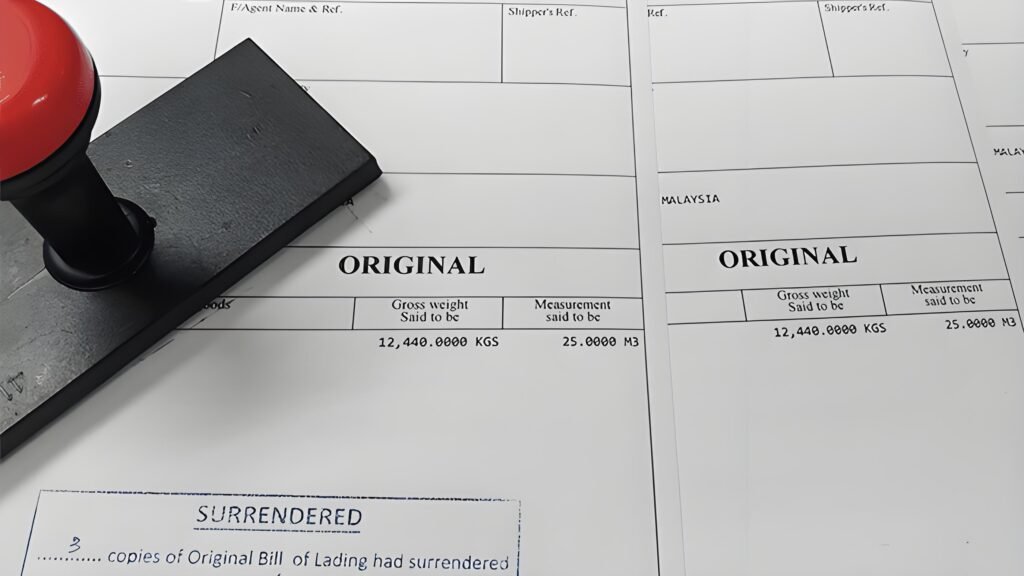
But the 70% against B/L copy? That is where the power dynamic flips. A Bill of Lading copy is exactly what it sounds like: a copy. It is not the Original B/L. It is not a document of title. It does not grant you the legal right to take possession of the goods. Under maritime law, the Original B/L (usually issued in a set of three originals) is the negotiable instrument that represents ownership of the cargo. A copy—whether scanned, photographed, or PDF’d—has no standing in a dispute. Yet buyers treat it like a green light.
Factories love this structure because it front-loads their risk. By the time you see a B/L copy, the goods are theoretically on the water. But “on the water” does not mean “as specified.” It does not mean “undamaged.” It does not even mean “actually loaded”—we have seen factories generate fake B/L copies using Photoshop templates from old shipments. The B/L copy payment risk is not theoretical. It is routine.
Here is the uncomfortable truth most sourcing blogs will not tell you: the 30/70 structure is not designed to protect the buyer. It is designed to protect the factory’s cash flow and transfer 100% of the quality risk to you the moment the vessel departs. The “industry standard” label is a convenient fiction repeated by factories and lazy agents who have never had to open a container of warped tabletops with a $28,000 balance already cleared.
The Hidden Mechanics: Five Traps Inside One Payment Term
Trap 1: The B/L Copy Is Not Proof of Shipment
A B/L copy shows a vessel name, a booking number, and a sailing date. That is it. It does not confirm the quantity inside the container. It does not confirm the quality. It does not even confirm the factory actually loaded the goods. In 2023, an office chair factory in Anji, Zhejiang sent a buyer a B/L copy for a 40HQ container. The buyer paid the 70%—roughly $18,000. The vessel arrived three weeks late. When the container was opened, 30% of the chairs had broken gas lifts and the mesh was the wrong specification. The factory had used an old B/L template, changed the date, and sent it as “proof.” The buyer had no Original B/L to claim against the carrier. The factory payment trap was complete.
Trap 2: Quality Leverage Disappears at 70% Payment
Here is the counter-intuitive part that breaks most buyers’ assumptions: the biggest loss in a bad furniture deal is rarely the 30% deposit. It is the 70% tail. A $50,000 order with a $15,000 deposit and a $35,000 tail payment means your real exposure is $35,000, not $15,000. Once that 70% is wired, the factory has no incentive to fix defects, remake wrong items, or even answer your emails. We have watched factories in Shunde literally tell buyers: “You can reject the goods, but we already have your money. Do what you want.” The quality inspection window closes the moment your bank confirms the wire.
Trap 3: Peak Season “Soft Blackmail”
From September to December, furniture factories in China are in peak export mode. Containers are scarce. Shipping lines are overbooked. A factory with a 30/70 deal and a tight delivery window knows you are desperate. We have seen this play out repeatedly: the factory sits on finished goods, misses the booked vessel, then blames the shipping line. They send a B/L copy from a later sailing and demand the 70% immediately to “secure the space.” You pay because your own customers are waiting. The goods arrive damaged from rushed packaging or substituted materials because the factory cut corners to make the new sailing date. You paid 100% for a compromised shipment.
Trap 4: Nominated Forwarders and No-B/L Release
If you let the factory choose the freight forwarder, you are exposed to a specific variant of this trap. A nominated forwarder—especially a small, local outfit in Shenzhen or Ningbo with a long relationship with the factory—can release cargo without the Original B/L. This is called “no-B/L release” or telex release abuse. The factory gets the B/L copy, you pay the 70%, but the forwarder has already released the goods to a local consignee or the factory’s own shell company. You have paid for goods you may never see, or you see them only after the factory has already cleared them through a side channel. In maritime practice, a forwarder is not a carrier; their liability is limited and often governed by local Chinese contract law that is nearly impossible for a foreign buyer to enforce.
Trap 5: The “Telex Release” Mirage
Some factories offer a “compromise”: they will surrender the Original B/L set to the carrier in exchange for a telex release, then send you the telex release copy as proof. This sounds safer. It is not. A telex release merely means the carrier has been instructed to release goods without presentation of the Original B/L. It does not give you control. If the factory instructs the carrier to release to a different party, or if the carrier’s local agent misreads instructions, you are still exposed. The telex release copy is just another piece of paper—or PDF—with no inherent protective power.
| Document Type | Legal Status | Grants Ownership? | Can Be Forged? | Buyer Protection Level |
|---|---|---|---|---|
| Original B/L (full set) | Negotiable instrument of title | Yes | Hard (requires carrier seal) | High |
| B/L Copy / Scan | Non-negotiable information copy | No | Extremely easy | Zero |
| Telex Release Copy | Instruction confirmation only | No | Easy | Minimal |
| Forwarder’s Cargo Receipt | Receipt only, not B/L | No | Easy | Zero |

RED FLAG: The Five Highest-Risk Scenarios
Nominated Forwarder: When the factory insists on using “their” freight forwarder, especially a small, non-global logistics company you cannot verify on FIATA or through your own freight audit. This is the single biggest predictor of no-B/L release risk.
Peak Season Large Orders: Any order above $30,000 placed between September and December with a first-time factory. The cash flow pressure on the factory is extreme, and the temptation to cut corners, substitute materials, or generate fake B/L copies is highest when their shop floor is overloaded.
Unverified New Factory: A factory with less than three years of export history, no verifiable customs records, and a website that looks like it was built last month. New factories are statistically the most likely to misuse B/L copy payments because they lack the long-term reputation capital to lose.
Lowball Pricing: If a factory’s quote is 20% below the next three competitors for the same specification, the 30/70 structure is almost certainly a trap. They plan to make margin by substituting materials after you have paid the 70%, knowing you cannot force a remake.
Trading Middleman Posing as Factory: A “factory” that cannot provide a factory audit video, refuses video calls from the production floor, and has a business scope on their business license that includes “trading” rather than “manufacturing.” You are not paying a factory. You are paying a broker who has even less incentive to deliver quality because they take margin from both sides.
Action Step: Three Moves That Actually Protect Your Capital
1. Split the 70% into Two Tranches
Do not accept 30/70. Negotiate 30/40/30. Thirty percent deposit to start production. Forty percent against verified B/L copy—but only after you have confirmed the B/L number directly with the carrier’s website or customer service line, not through the factory’s link. The final 30% only after pre-shipment inspection (PSI) by a third party like SGS, Bureau Veritas, or your own inspector on the ground in Foshan. This keeps $30,000 of leverage on a $100,000 order instead of surrendering it at the dock.
2. Demand Original B/L Control or a Letter of Credit
For orders above $50,000, refuse B/L copy terms entirely. Insist on Original B/L collection through your bank or a confirmed Letter of Credit (L/C). An L/C shifts the payment risk to the banking system. The factory only gets paid when the documents—including clean B/L, commercial invoice, packing list, and inspection certificate—match the L/C terms exactly. Yes, L/Cs cost 0.5–1.5% in bank fees. That is cheap insurance against a $40,000 quality disaster. If the factory refuses an L/C, that is a signal. They know their own quality control is not good enough to pass a bank document check.
3. Set Inspection Gates Before the 70% Trigger
Never let the 70% payment be the last quality gate. Build these three checkpoints into your PO:
● 70% Production Completion Check: Inspector verifies materials, frame construction, and upholstery match the spec sheet. Factory cannot proceed to final assembly without sign-off.
● Pre-Shipment Inspection (PSI): Full inspection of finished goods before they touch the container. Defect rate above your AQL limit? Factory remakes or you deduct from the final 30%.
● Container Loading Supervision (CLS): Your inspector watches the container being sealed and verifies the seal number matches the B/L. This prevents the “bait and switch” where good samples are loaded for inspection but the main shipment is substituted.
| Payment Structure | Factory Cash Flow | Buyer Quality Leverage | Forgery Risk | Recommended For |
|---|---|---|---|---|
| 30/70 B/L Copy | Excellent | Zero (after 70% paid) | High | No one |
| 30/40/30 + PSI | Good | Moderate | Medium | Orders $20k–$50k |
| 30/40/30 + L/C | Moderate | High | Low | Orders $50k+ |
| 100% L/C at sight | Tight | Very High | Very Low | First-time factories |

FAQ: The Questions Buyers Actually Ask
Q: Isn’t 30/70 against B/L copy the industry standard? Why would factories agree to anything else?
It is common. It is not standard in any legal or contractual sense. Factories agree to alternative terms when you have leverage—volume, repeat orders, or a willingness to walk. The factories that refuse anything except 30/70 are often the ones with the weakest quality control, because they know they cannot survive a post-shipment inspection or an L/C document check. A “standard” that transfers all risk to the buyer is not a standard. It is a power play.
Q: How do I avoid no-B/L release risk if the factory insists on their forwarder?
You do not avoid it. You refuse it. If a factory will not let you nominate a global forwarder (Kuehne+Nagel, DHL Global, Expeditors, or your own vetted agent), you are looking at a China factory payment trap with a freight component. At minimum, if you must use their forwarder, require the Original B/L to be consigned “to order of [your bank name]” and sent directly to your bank, not to the factory or their agent. If the forwarder or factory pushes back on this, walk away. There are ten thousand furniture factories in China. You do not need that one.
Q: I am an individual buyer ordering one container for my own property. Is 30/70 acceptable for me?
No. Individual buyers actually have less recourse than a business. A company can send a lawyer to Guangzhou or engage a Chinese law firm for arbitration. An individual buyer has neither the budget nor the legal entity structure to enforce a contract in China. If you are a private buyer with a single container, you should never pay more than 50% before you or your representative have physically inspected the goods. Use an escrow service, hire a local inspection agent in Foshan for $300–$500, or buy through a verified sourcing company that holds payment until you confirm receipt. The B/L copy payment risk is magnified when you have no corporate legal team to chase a bad actor.
Your Next Step
If you are currently negotiating a furniture order with a Chinese factory and the payment terms are 30/70 against B/L copy, stop. Send them a revised term sheet: 30/40/30 with PSI and CLS gates. If they refuse, ask yourself why a factory confident in its quality would reject a structure that still pays them 70% before the goods leave the port.
Recommended Resource
Interi Furniture specializes in custom furniture manufacturing for residential, hospitality, and commercial projects. Their experience in materials, craftsmanship, and project realization makes them a valuable resource for designers and buyers seeking tailored furniture solutions from China.