

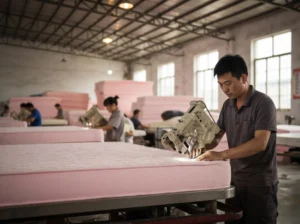








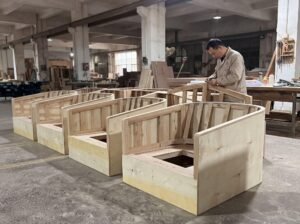
Middle East furniture import flows from China reached a structural inflection point after 2023. Growth rates for Gulf Cooperation Council destinations now outpace Western Europe and North America across seating, case goods, and hotel FF&E categories. Saudi Arabia and the United Arab Emirates absorb volumes that rival major European markets.
This surge reflects sustained factory reorientation toward Gulf specifications. Large-scale national transformation programs, luxury real estate pipelines, and hospitality construction timelines stretch through the decade. European buyers remain significant, but procurement momentum has shifted eastward.
The Stereotype vs. The Reality: What Middle East Buyers Actually Want
Beyond Price: The Premium Pivot in Gulf Procurement
The myth that Middle Eastern buyers hunt exclusively for lowest factory-gate price persists among inexperienced Foshan sales staff. This assumption costs factories real revenue.
Gulf project buyers routinely outspend European retail importers on per-unit metrics. Villa fit-outs in Riyadh and hotel packages in Dubai operate on budgets where durability and aesthetic alignment matter more than marginal savings. These buyers purchase by the container. They specify high-density foam, solid wood frames, and imported hardware. Average order values from Saudi developers often exceed those of mid-sized German distributors by multiples.
Price sensitivity exists but manifests differently. Gulf buyers negotiate volume tiers and shipping terms aggressively. They do not downgrade materials to chase pennies. Suppliers who treat them like clearance-bin shoppers lose the relationship before the first sample ships.
The Aesthetic Requirements Western Suppliers Ignore
Islamic spatial design carries requirements that Western catalogs fail to address. The Majlis, a formal reception room central to Gulf architecture, demands sectional seating for face-to-face conversation. Low-profile sofas with ornate wood detailing dominate. European minimalism does not translate.
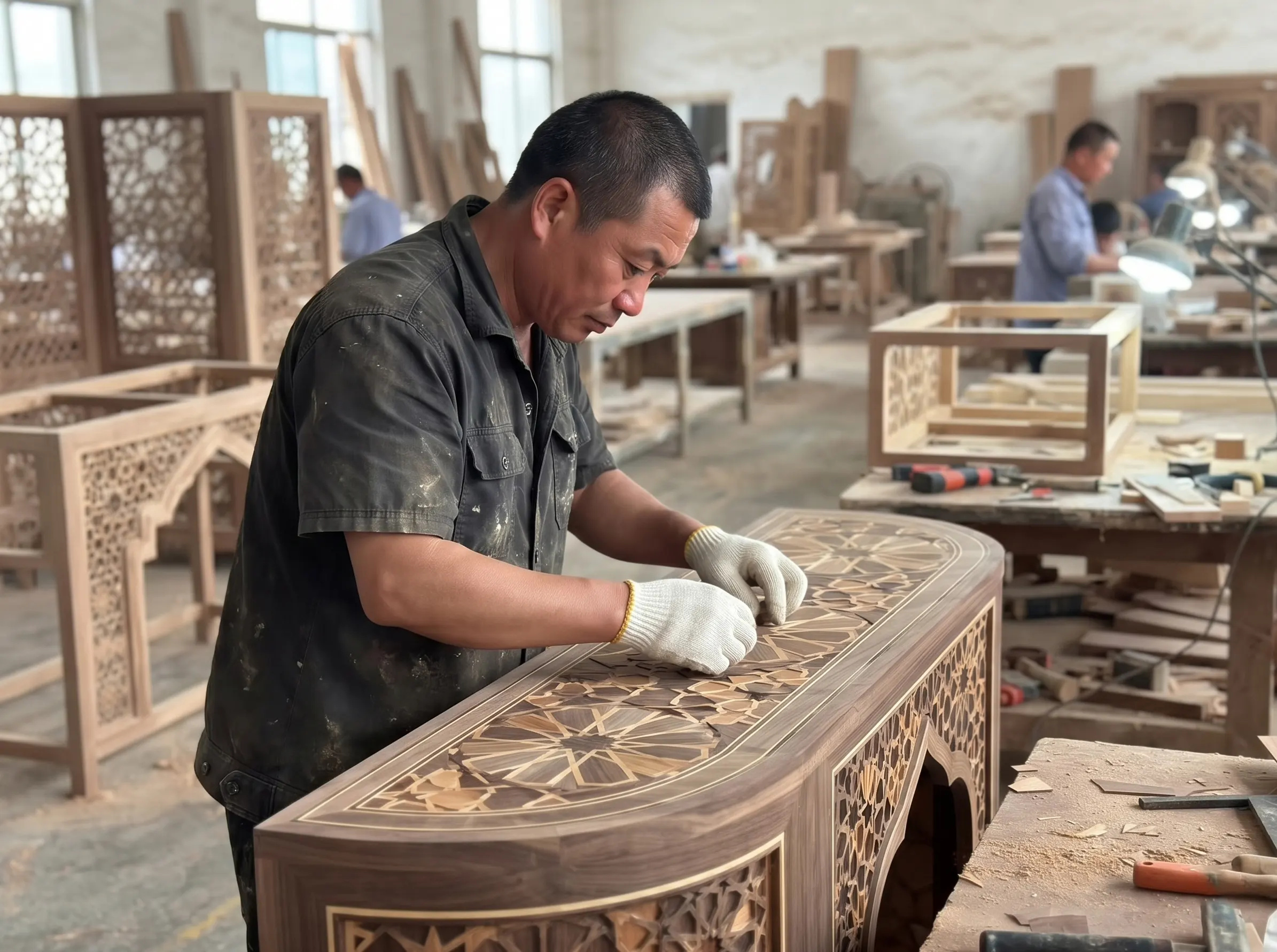
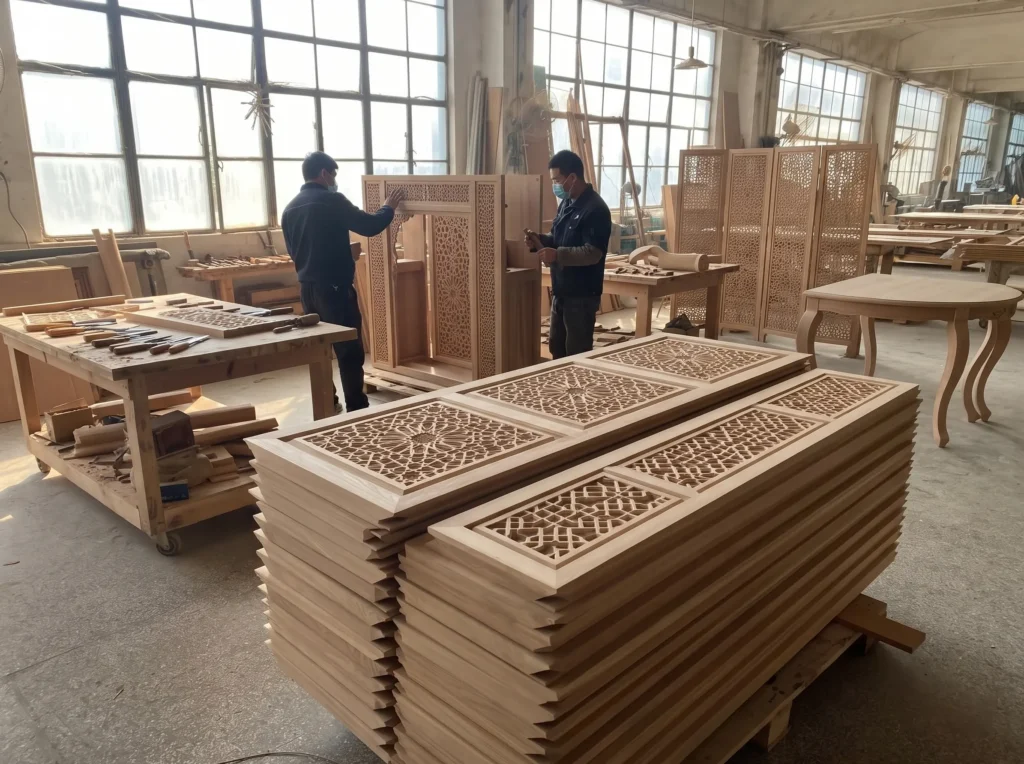
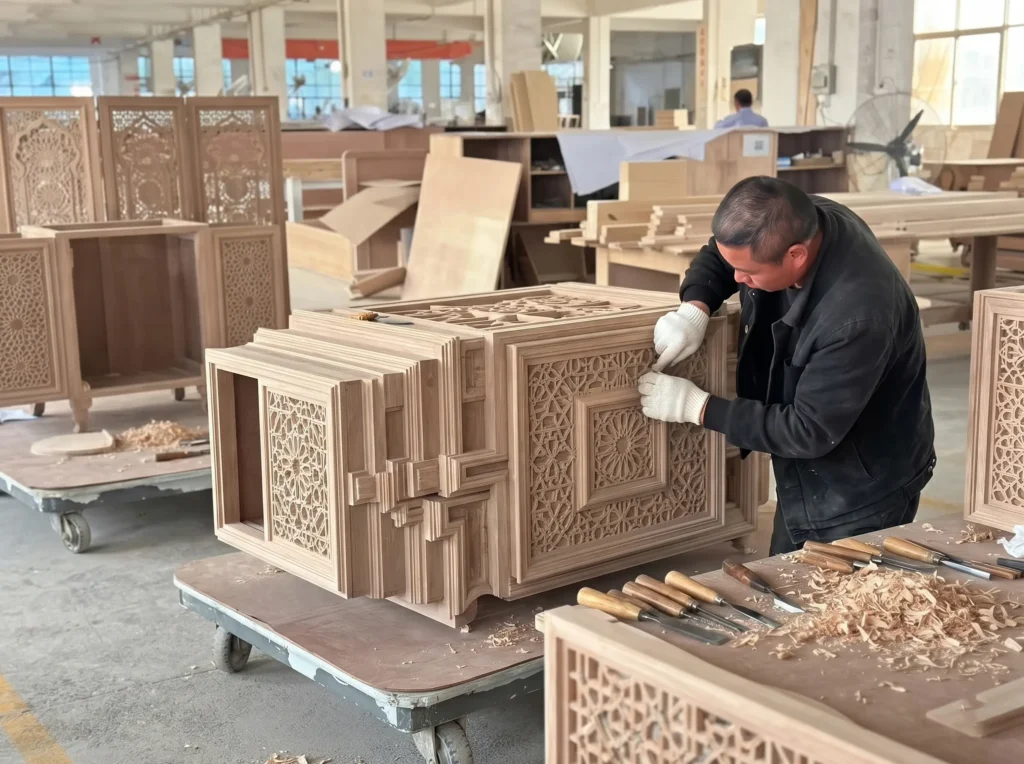
Color palettes lean toward deep golds, emerald greens, and burgundy. Geometric inlay patterns and carved arabesque motifs carry cultural weight that generic styling cannot approximate. Chinese factories that invested in CNC programs for these patterns hold distinct advantages.
Religious compliance extends to materials. Leather must often be halal-certified. Alcohol-based finishes are rejected outright. Suppliers who overlook these constraints find containers stalled at Jeddah or Jebel Ali for reasons unrelated to price.
The Economic Engine Behind the Boom
Saudi Vision 2030 and the Construction Pipeline
Saudi Vision 2030 has moved into heavy construction. NEOM, the Red Sea Project, and Qiddiya are active sites with procurement tied to opening dates. Economic diversification has created demand for hospitality seating, office systems, and residential interiors that domestic manufacturing cannot satisfy. Local production remains limited to basic joinery. The gap is filled by Chinese imports.
Government giga-projects follow rigorous timelines. Delayed deliveries trigger contractor penalty clauses. This creates preference for Chinese suppliers who guarantee scale and certainty, even at premium pricing.
UAE Real Estate and Hospitality Expansion
Dubai and Abu Dhabi expand luxury residential and hotel inventory faster than local supply chains support. The UAE functions as a regional redistribution hub. Furniture landed in Jebel Ali often transits to Oman, Bahrain, and Kuwait.
Hotel operators maintain brand standards aligned with global chains. FF&E procurement requires factories capable of producing custom case goods and vanity units in consistent batches across thousands of rooms. Chinese manufacturers with hospitality experience adapted these lines for Gulf finishes.
Developers in Dubai Marina and Saadiyat Island purchase bulk packages for serviced apartments. These orders favor contemporary designs with Arabic detailing, a niche Foshan factories have developed aggressively.
Qatar’s Post-World Cup Infrastructure Legacy
The 2022 World Cup left Qatar with infrastructure requiring ongoing furniture refresh cycles. It also established Qatar as a host for international conferences and summits. New hotels, offices, and schools launched post-tournament continue generating demand.
Qatari buyers favor European aesthetics filtered through Gulf scale requirements. Chinese suppliers replicating Italian silhouettes while delivering Gulf-compliant dimensions have captured significant share.
The market is smaller than Saudi or UAE volumes, but per-capita procurement intensity remains among the world’s highest. Orders concentrate among a handful of development groups, simplifying relationship mapping for suppliers investing in direct engagement.
How Chinese Furniture Clusters Are Adapting to Gulf Demand
Foshan: From European Replicas to Majlis-Ready Custom Lines
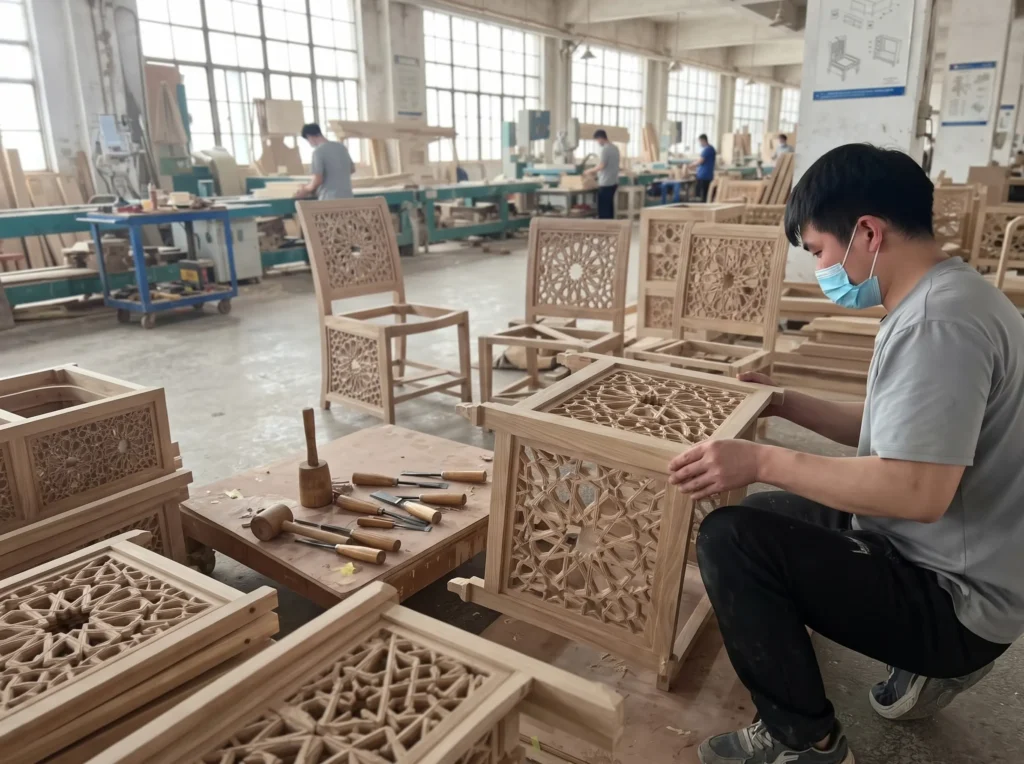
Foshan has undergone a quiet revolution. Factories built on European reproductions have retooled CNC stations for arabesque patterns. Upholstery workshops now stock gold-threaded fabrics and high-pile velvets.
Several manufacturers have allocated substantial capacity to Middle East-specific lines. These produce Majlis corner sofas with storage, oversized coffee tables with inlay, and dining sets scaled for large families. Gulf orders carry higher margins and longer runs than fragmented European retail orders.
Showrooms in Lecong now feature dedicated Middle East floors. Sales teams have hired Arabic-speaking staff who understand project negotiation. For reference only, subject to official verification, industry observers estimate Foshan’s direct and indirect Middle East exports have grown at double-digit annual rates since 2022.
Anji: Ergonomic Office Furniture for Gulf Corporate Spaces
Anji County dominates global office chair production. As Gulf economies diversify, corporate construction in Riyadh, Doha, and Abu Dhabi has surged. Anji manufacturers expanded executive lines with leather upholstery and weight capacities calibrated for larger frames.
Height-adjustable desks and modular workstations now ship regularly to Gulf contractors. Gulf office standards require heavier-duty casters, wider seat pans, and reinforced gas lifts. Anji factories incorporated these into standard SKUs.
Local Saudi office furniture ventures pose minimal competitive threat. Anji’s scale advantage in mesh weaving and injection molding creates a cost-quality combination regional startups cannot match.
Yunfu: Marble and Stone Finishing for Luxury Residential Towers
Yunfu is China’s stone processing capital. It transforms imported marble and granite into finished tabletops, vanity counters, and wall panels. Gulf luxury towers specify marble finishes as standard.
Yunfu factories developed waterjet cutting for Islamic geometric patterns and resin-filling techniques for flawless surfaces demanded by five-star standards. Stone furniture has become a high-margin export category.
Shipping stone requires specialized crating. Yunfu exporters developed plywood crate standards with foam suspension systems that reduce transit damage below general furniture rates.
The Procurement Behavior Gap: Middle East Buyers vs. Western Buyers
Understanding behavioral divergence is essential. The following reflects observed patterns across factory floors and trade finance desks.
| Dimension | Middle East Buyers | Western Buyers |
|---|---|---|
| Relationship driver | Personal trust and factory visit verification | Contract terms and specification compliance |
| Payment structure | Letter of credit with complex documentary requirements | Telegraphic transfer or open account for established partners |
| Average order volume | Project-based, often full container to full vessel | Mixed container or less-than-container-load |
| Customization depth | Deep: dimensions, materials, finishes per Gulf codes | Moderate: catalog selections with minor modifications |
| Factory visit frequency | High; majority of new partnerships involve on-site inspection | Lower; reliance on audits and virtual inspections |
| Lead time tolerance | Moderate if relationship established; rigid for giga-projects | Strict; seasonal retail deadlines immovable |
| Dispute resolution | Relationship-mediated; repeat business contingent on face-saving | Contract-mediated; chargebacks and claims-driven |
Payment Terms and Relationship Dynamics
Gulf buyers rely on letters of credit for initial transactions. These are documentary battlegrounds where discrepancies in packing lists or bills of lading trigger delays.
Chinese suppliers accustomed to deposit-against-B/L terms from American buyers face a steep curve. LC advising bank selection matters. Soft clauses allow buyers to reject documents for subjective reasons. Suppliers who fail to review LC drafts with trade finance personnel often finance buyer inventory involuntarily.
Relationship capital operates as parallel currency. Factory owners who host procurement teams and accommodate Ramadan scheduling build goodwill that translates into payment flexibility.
Order Volume and Customization Tolerance
Western retail buyers purchase catalog items with minor swaps. Gulf project buyers issue specification books redefining dimensions, construction, and packaging. Hotel headboards may require custom heights for regional mattress standards. Majlis sofas may need frame modifications for heavier upholstery.
This creates opportunity but engineering risk. Factories accepting deep custom orders without validating structural implications face field failures. The margin justifies engineering investment, but only for factories with in-house technical teams.
Logistics Preferences and Port Infrastructure
Jebel Ali and King Abdullah Port handle most direct imports. Gulf buyers increasingly prefer direct vessel calls over transshipment through Singapore or Colombo to reduce handling damage.
For secondary markets, Dubai serves as redistribution hub. Containers cleared through Jebel Ali Free Zone enter bonded warehousing before delivery to Oman, Bahrain, or Kuwait. Chinese suppliers selling on Ex Works or FOB terms rarely see this complexity, but buyers factor warehousing into landed price negotiations.
The Hidden Friction Points No One Talks About
The Letter of Credit Complexity
Letters of credit from Gulf banks are operationally treacherous for unprepared exporters. Confirming fees add cost. Presentation windows are narrow. Discrepancy fees accumulate.
The unspoken risk is the soft clause. Language stating “goods to buyer’s satisfaction” converts a documentary credit into a conditional promise. Suppliers have shipped containers that sat in port while buyers leveraged rejections to renegotiate pricing.
Experienced exporters negotiate LC terms before production. They insist on third-party inspection certificates from SGS or Bureau Veritas rather than buyer-controlled agents. They confirm LCs through Chinese banks with Gulf correspondent relationships.
Religious Compliance and Material Certification
Saudi SABER and UAE ECAS impose requirements beyond typical CE or UL standards. Furniture imported into Saudi Arabia must register through SABER, obtain a Product Certificate of Conformity, and secure a Shipment Certificate for each batch. For reference only, subject to official verification, specific testing protocols and documentation categories evolve as SASO updates technical regulations.
Testing for formaldehyde, flame retardancy, and heavy metals is mandatory under current frameworks. Leather goods may require halal certification. Wood products need sustainable sourcing documentation under strict Gulf environmental guidelines. Suppliers should verify current requirements directly with SASO or accredited certification bodies before production, as rules change without advance notice.
This burden filters out small-scale Southeast Asian competitors lacking capital or expertise. Chinese factories with dedicated compliance staff turned this barrier into a competitive moat.
Geopolitical Risk and Currency Volatility
Red Sea shipping has faced sustained disruption. Operators rerouted around the Cape of Good Hope, adding fourteen to twenty-one days and increasing freight rates significantly. For reference only, subject to official verification, certain Gulf-bound shipments saw freight cost increases exceeding fifty percent during peak disruption.
Currency risk compounds delays. Saudi riyal and UAE dirham are pegged to the US dollar, providing stability. However, payment delays stretch exposure windows. Shipments invoiced in dollars but paid ninety days after delivery face exchange volatility if the yuan appreciates.
Sanctions risk requires vigilance. Suppliers must screen buyers against restricted party lists. Payment routing through certain correspondent banks can trigger compliance holds.
What This Means for Global Buyers and Chinese Suppliers
For Chinese Suppliers: Entering the Gulf Market Without Missteps
Suppliers should not treat the Gulf as a clearance market for European overstock. Buyers remember factories that dumped inferior goods. Sustainable share requires dedicated product lines, Arabic-speaking support, and rigorous LC review.
Factory visits are non-negotiable. Buyers who cannot inspect facilities select competitors who accommodate. Showrooms should display Majlis configurations and hospitality case goods in regional finishes.
Compliance investment pays dividends. Maintaining SABER and ECAS registrations, halal certifications, and third-party inspection relationships signals professionalism. Upfront costs recover through higher order values.
For Western Buyers: Understanding the Global Supply Chain Shift
Western procurement managers should recognize that Chinese capacity is reallocating. Lines that produced sofas for California distributors now run Majlis sections for Riyadh. Lead times for Western catalog items may lengthen.
This does not signal abandonment of Western markets. It means price and timeline expectations must adjust. Buyers understanding competitive pressure from Gulf orders can negotiate more realistically. They can also explore whether their specifications align with efficiencies created by Gulf-scale orders.
For Gulf-Based Importers: Leveraging China’s Cluster Advantages
Importers in Dubai or Riyadh possess underutilized leverage. Chinese clusters compete fiercely for Gulf business. Importers with clear specifications, reliable payments, and consistent volume secure terms matching European counterparts.
The key is cluster specialization. Foshan for residential upholstery. Anji for office systems. Yunfu for stone. Dongguan for metal and hardware. Guangzhou for logistics coordination. Importers mapping procurement to these clusters rather than single-source generalists optimize quality and cost.

FAQ: Middle East Furniture Import from China
Which Chinese cities export the most furniture to the Middle East?
Foshan in Guangdong Province dominates upholstered and case goods exports. Anji in Zhejiang Province leads office furniture. Yunfu specializes in stone-based furniture. Dongguan and Shenzhen contribute precision components and metal frames. Guangzhou functions as the primary logistics and customs coordination hub.
Do Middle East buyers only purchase low-cost furniture from China?
No. Gulf buyers frequently purchase premium and custom-tier products. Project-based procurement for hotels, villas, and offices emphasizes material quality, scale consistency, and aesthetic compliance over rock-bottom pricing. Average per-unit spend on Gulf orders often exceeds European retail import averages.
What certifications are required for furniture imported into Saudi Arabia?
Saudi Arabia requires SABER registration. Exporters must obtain a Product Certificate of Conformity and a Shipment Certificate of Conformity per consignment. Testing for formaldehyde, flame retardancy, and structural safety is standard under current SASO technical regulations. Additional requirements may include halal certification for leather and sustainable wood sourcing documentation. Regulations change frequently; verify current rules with SASO or an accredited body before production.
How does Ramadan affect furniture production and shipping timelines?
Ramadan reduces factory output as Muslim workers take leave and staff adjust to altered client communication patterns. Shipping schedules compress before Eid al-Fitr as buyers rush to clear customs before closures. Planning should account for reduced responsiveness during Ramadan and port delays during Eid.
Is it better to ship furniture to the Gulf by sea or land?
Sea freight dominates full container loads from China to Gulf ports. Direct vessel calls to Jebel Ali, King Abdullah Port, and Hamad Port offer optimal cost-reliability balance. Land routes through Central Asia exist but serve regional redistribution rather than primary transit. Air freight applies only to samples or small high-value components.
Why do Middle East buyers insist on factory visits before placing orders?
Gulf procurement culture prioritizes personal relationship verification. Factory visits allow direct assessment of capacity, quality control, and management credibility. This reduces perceived risk more effectively than digital catalogs. Suppliers resisting site visits are often interpreted as hiding deficiencies.
Recommended Resource
Interi Furniture specializes in custom furniture manufacturing for residential, hospitality, and commercial projects. Their experience in materials, craftsmanship, and project realization makes them a valuable resource for designers and buyers seeking tailored furniture solutions from China.